Where to Find Aluminum Coil Supplier for Servers
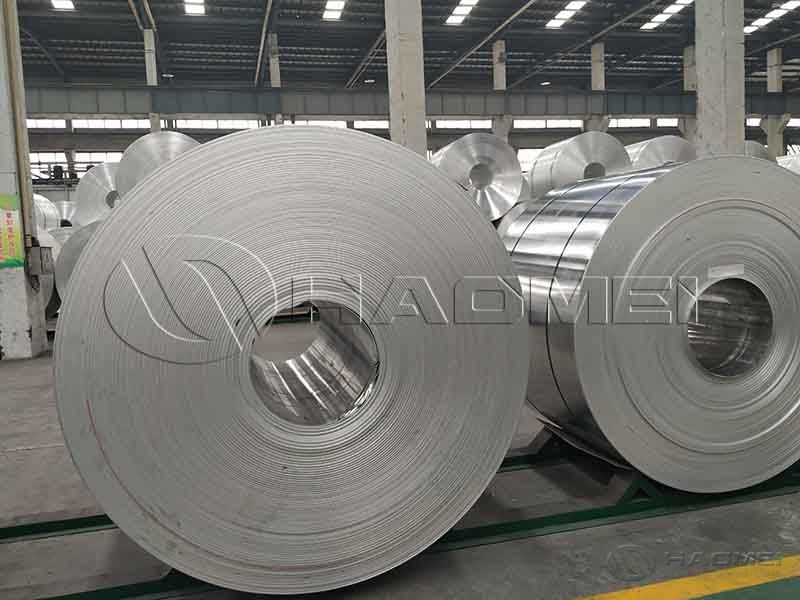
Explore high-precision aluminum coil for servers featuring great thermal conductivity, stable shielding & cost efficiency. Learn core applications, dominant 3003 & 5052 alloys, and standard thickness grades for server chassis, cooling & structural parts.
Aluminum coils feature low density, superior thermal conductivity, easy stamping, cost efficiency and reliable electromagnetic shielding, making them vital raw materials for server hardware manufacturing. Unlike standard industrial aluminum coils, server-grade variants enforce stricter flatness, dimensional precision, ductility and eco standards to fabricate precision sheet metal, heat dissipation and shielding structural parts.

I. Core Server Equipment Applications of Aluminum Coils
1. Server Chassis & Rack Sheet Metal
The chassis acts as the server’s primary load-bearing framework, balancing structural strength, lightweight design and assembly accuracy, and consumes the largest volume of aluminum coil stock. Processed via leveling, bending, stamping and cutting, aluminum coils produce chassis casings, side/back panels, rack supports and mounting brackets.
Replacing conventional steel plates, aluminum sheet metal slashes overall machine weight for easier transit and rack stacking. It retains sufficient rigidity to withstand routine vibration and light compression, stabilizing chassis structures and preventing loose or damaged internal hardware.
2. Cooling System Core Components
Server CPUs, GPUs and hard drives generate massive heat under sustained heavy loads, and cooling capacity directly governs device stability. Aluminum's thermal conductivity far outperforms steel, so coils are the top material for cooling parts: heat sink fins, cooling plates, vapor chamber substrates and airflow separators.
Ultra-thin aluminum substrates undergo precision stamping into dense heat-exchange structures to rapidly conduct and expel internal heat, eliminating thermal throttling, system crashes and premature hardware aging caused by accumulated heat.
3. Electromagnetic Shielding & Insulating Parts
Dense internal wiring and frequent signal transmission leave servers vulnerable to electromagnetic interference, which distorts data signals and threatens operational safety. Aluminum coils deliver robust shielding performance, machined into internal shielding covers, signal partition baffles and interface guard sheets to block cross-internal and external electromagnetic radiation, stopping signal crosstalk for consistent data transmission. Additionally, the natural surface oxide film of aluminum resists corrosion and delivers decent insulation, safeguarding delicate circuits from moisture- and dust-induced short circuits.
4. Auxiliary Decorative & Protective Fittings
Beyond primary structural and functional parts, aluminum coils manufacture secondary accessories: dust filter frames, cable fixing plates, equipment foot mount plates and decorative panel trims. Their smooth surfaces support direct anodization and spray coating to combine corrosion protection with neat appearance. The material accommodates precision operations including micro-hole punching and tight bending, matching server manufacturing’s strict precision benchmarks.
II. Dominant Aluminum Alloys for Server Manufacturing
Server parts have divergent requirements for mechanical stress, heat dissipation and formability. Two alloys dominate production lines: 3003 anti-rust aluminum coil and high-strength 5052 aluminum coil. Pure aluminum and high-hard specialty alloys see minimal use, as these two grades cover nearly all server component production scenarios with complementary strengths.
1. 3003 Aluminum Coil
3003 aluminum coil is the most widely used general coil across server production, supplied mainly in H14 and H18 tempers. It combines outstanding rust resistance, flexibility and stamping performance at a competitive price point. Its anti-corrosion properties surpass pure aluminum, suiting data center environments with constant humidity and mild dampness to prevent oxidation and rust. The alloy retains strong ductility without cracking during bending, stretching or stamping, ideal for lightweight precision component fabrication.
Applicable Scenarios: Non-load-bearing, frequently formed lightweight functional parts: heat sink fins, air duct separators, electromagnetic shielding sheets, dust filter frames, cable clamps and internal lightweight baffles. It is the primary feedstock for lightweight server functional hardware.
2. 5052 Aluminum Coil
5052 aluminum coil belongs to the 5-series magnesium-aluminum alloy, offering medium-high tensile strength and excellent anti-corrosion performance, typically stocked in H32 and H34 tempers. Compared with 3003, its tensile and yield strength are markedly elevated for enhanced structural rigidity and superior anti-deformation capacity, while maintaining easy machinability and long-term corrosion resistance for stable performance in complex operating conditions.
Applicable Scenarios: Load-bearing structural server components, including chassis casings, side/back panels, rack supports, mounting brackets and equipment bases. These core load-bearing parts absorb impacts from stacking, shipping and continuous operational vibration to sustain overall structural integrity, serving as the dedicated alloy for server load-bearing sheet metal.
III. Standard Thickness Grades for Server-Specific Aluminum Coils
1. Ultra-Thin Light Functional Parts: 0.2mm–1.0mm
This range exclusively utilizes 3003-H18 aluminum coils, valued for ultra-thin gauge, light weight and exceptional flatness optimized for precision stamping. The 0.2–0.4mm tier produces ultra-thin heat sink fins and micro shielding foils; 0.5–1.0mm stock makes air baffles and dust frames, cutting internal space occupation while retaining basic structural stability for lightweight functional assemblies.
2. General Sheet Metal: 1.0mm–2.0mm
This universal thickness works with both 3003 and 5052 coils for most standard server mass production. 1.0–1.5mm 3003 suits non-load-bearing inner guards and general light sheet metal; 1.2–2.0mm 5052-H32 fabricates mainstream structural pieces such as side panels and auxiliary brackets, striking a balanced mix of bendability and mechanical strength.
3. Heavy Load-Bearing Structural Parts: 2.0mm–3.0mm
Only high-strength 5052 coils are deployed here, delivering maximum rigidity and deformation resistance for critical load-bearing hardware: equipment bases, main rack frames, thickened backplates and heavy-duty mounting brackets. For densely stacked rack server deployments, this thickness boosts overall load capacity, eliminating chassis warping and hardware misalignment stemming from long-term stacking and running vibration to secure long-lifetime stable server operation.
- 20 Tons of Aluminum with Polysurlyn Moisture Barrier to UAEJan 08, 2020
Haomei aluminum with polysurlyn moisture barrier is on hot sale. 20 tons of aluminum plain jacketing roll has...
- The Multiple Uses of Aluminum Trim RollFeb 21, 2022
Aluminum trim roll is widely used for roofing system, curtain wall, wall decoration, ceiling, roller shutter,...
- Top Five Coatings of Aluminum Sheet CoilJan 08, 2020
Top five coatings of aluminum sheet coil are PE, PVC,PVDF, Polycraft and Polysurlyn. PVC trim coil and aluminu...
- Versatile Color Coated Aluminum Coil In ConstructionJun 05, 2023
The color coated aluminium coil is widely used in roof, curtain wall, ceiling, honeycomb panel, aluminum alloy...
- The Packaging Tips for Polysurlyn Laminated Aluminum Coil Apr 22, 2020
Polysurlyn laminated aluminum coil has been the primary choice of insulation and anti-corrosion engineering. T...
Inquiry
TABLE OF Contents

Haomei Aluminum CO., LTD.
Tel/Whatsapp: +86-15978414719
Email: sale@alumhm.com
Website: https://www.alumhm.com
Xin'an Industrial Assemble Region,Luoyang,Henan Province,China
Office Add: 1103, No.14 Waihuan Road, CBD, Zhengzhou, China