Polished Aluminum Sheet
Learn how to source polished aluminum sheet with the right alloy, finish, ASTM B209 tolerances, reflectivity checks, and damage-control packaging.
Polished Aluminum Sheet is usually selected for one top concern: surface appearance. In practice, most quality disputes are not about strength or chemistry, but about scratches, waviness, reflectivity variation, and poor film protection after delivery. For decorative panels, lighting, appliances, signage, and interior trim, finish consistency matters as much as alloy and thickness.

What it is and how it is specified
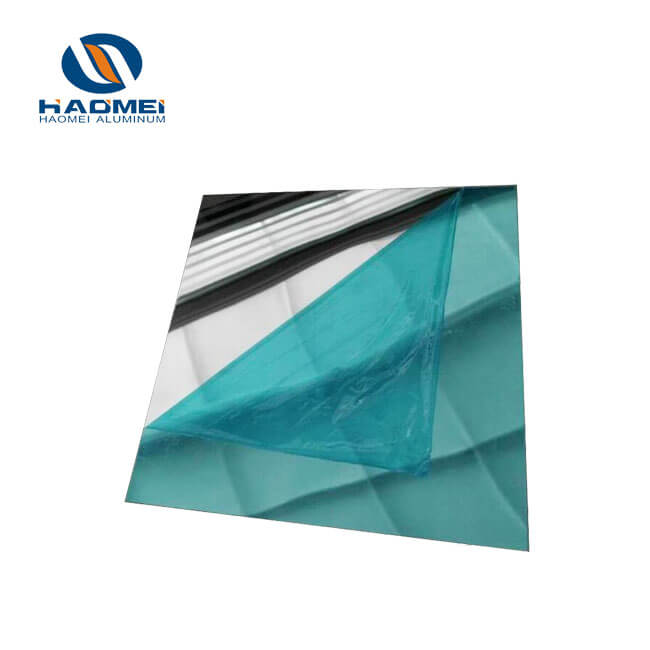
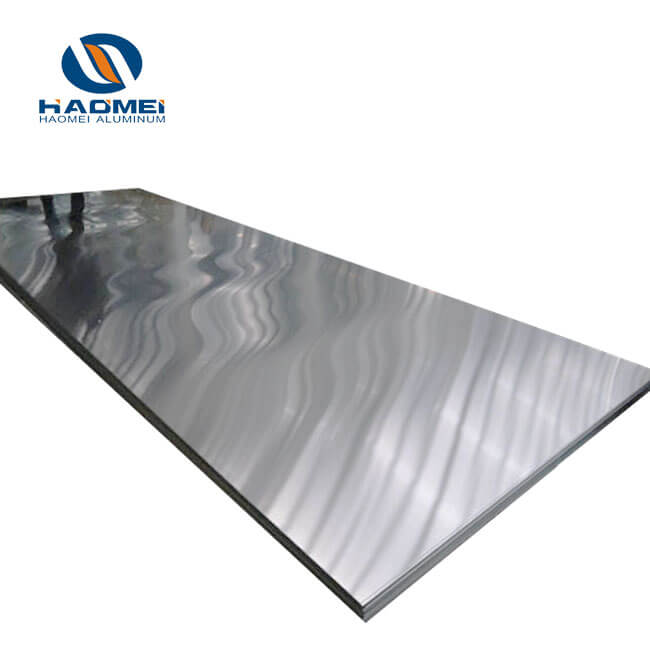
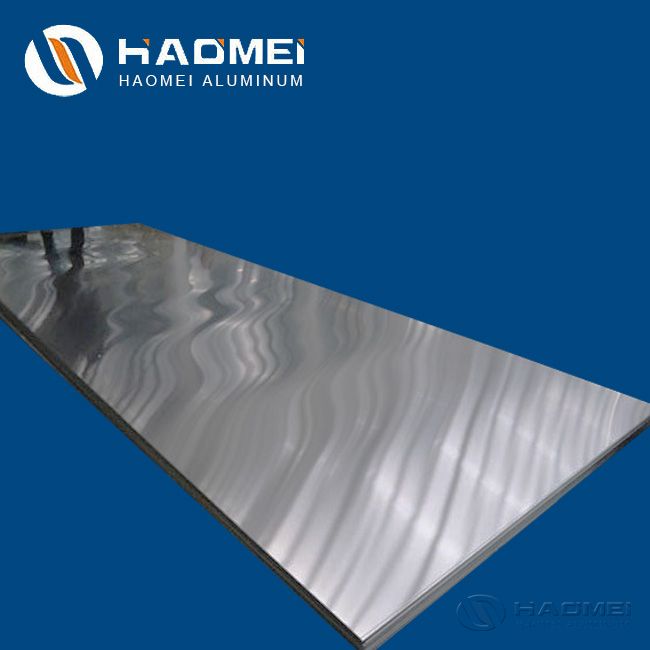
A polished aluminum product is a rolled plate with a mechanically polished, buffed, or mirror-like surface. Some products are only bright-finished; others are further anodized to improve corrosion resistance and surface durability. In procurement, this distinction must be written clearly because "polished" alone is too broad.
Use this minimum specification structure in RFQs:
- Alloy and temper: 1050, 1060, 3003, 5005, 5052, etc.
- Thickness, width, length
- Base standard: ASTM B209 for aluminum and aluminum-alloy sheet and plate, or EN 485 for European supply
- Surface type: bright finish, mechanically polished, mirror finish, anodized mirror finish
- One-side or two-side polishing
- Protective film type and thickness
- Allowed defect level: scratches, roller marks, waviness, oil stains, edge damage
- Packaging: interleaving paper, PVC film, export pallet, moisture barrier
For general flat rolled products, many users start from Aluminum Sheet/Plate specifications, then add separate finish acceptance criteria.
Alloy selection and finish performance
The best-looking surface is not always the best-performing surface. Pure aluminum grades generally polish more easily, while alloyed grades may offer better strength or corrosion resistance.
| Alloy | Typical use | Finish quality | Formability | Corrosion resistance | Notes |
|---|---|---|---|---|---|
| 1050 / 1060 | Reflectors, signage, trim | Excellent | Excellent | Very good | High purity supports bright finish |
| 3003 | Decorative panels, appliance parts | Good | Excellent | Good | Better strength than 1xxx, slightly lower brightness |
| 5005 | Architectural anodizing | Very good | Good | Very good | Common choice where anodized appearance matters |
| 5052 | Functional panels, humid environments | Fair to good | Good | Excellent | Better corrosion resistance, but not first choice for highest reflectivity |
If maximum reflectivity and low surface inclusions are required, 1050 Pure Aluminum Sheet is a frequent starting point. If the part will be exposed to handling, humidity, or mild chemicals, 5005 or 5052 may be more practical even with some trade-off in mirror effect.
Standards, testing, and what to inspect before approval
For dimension and basic material compliance, ASTM B209 is widely used in the U.S. market. It covers chemical composition, mechanical properties, tolerances, and general requirements for sheet and plate. European orders commonly reference EN 485 series for flat rolled products, while chemical composition may be checked against EN 573 or Aluminum Association alloy designations.
For polished surfaces, however, ASTM B209 alone is not enough. Add inspection items that can actually control appearance.
Practical incoming inspection checklist
| Item | What to request | Typical method |
|---|---|---|
| Alloy verification | Mill test certificate | Chemistry review, PMI if needed |
| Thickness tolerance | Per ASTM B209 or EN 485 | Micrometer at multiple points |
| Flatness | Internal agreement or project spec | Flat table or straightedge check |
| Surface roughness | Ra value if critical | Portable roughness tester |
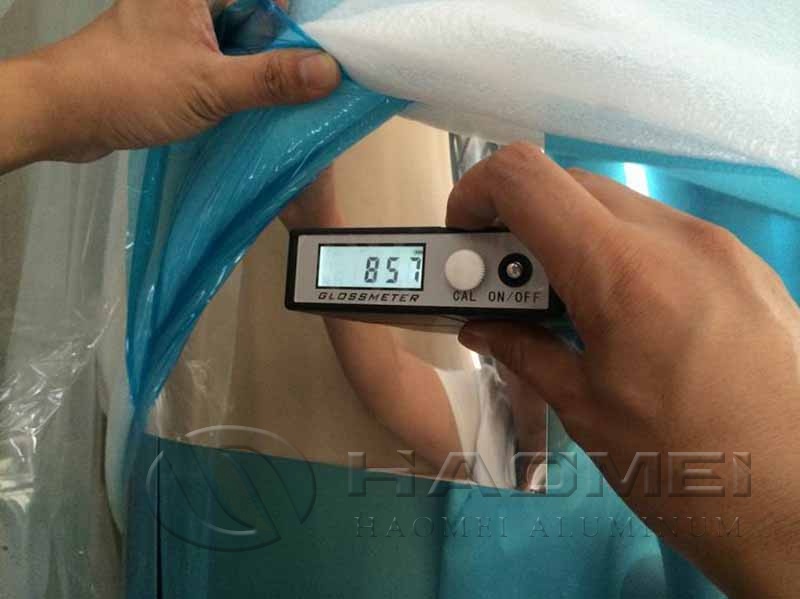
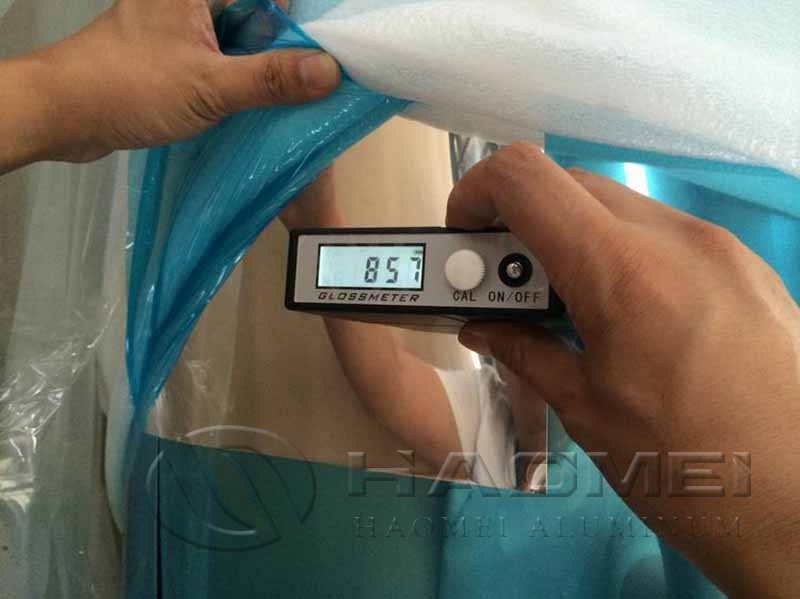
| Reflectivity | Minimum total or specular reflectance if required | Reflectometer, agreed angle/method |
| Visual defects | Limit samples or written criteria | Inspection under agreed light condition |
| Film adhesion | No peeling in transit and handling | Manual peel test |
| Packing condition | Dry, sealed, edge-protected | Pre-shipment photo and receiving check |
Common defect language to write into contracts
- No continuous scratches visible at 1 m under normal indoor lighting.
- No oil marks, oxidation spots, water stains, or black lines.
- No edge collapse affecting shearing, laser cutting, or bending.
- Protective film must be removable without adhesive residue.
- Surface acceptance to be based on agreed reference samples.
Reference samples are especially important because "mirror", "high polish", and "bright" are interpreted differently by different mills.
Comparing polished, mirror, and anodized mirror products
| Type | Appearance | Durability | Typical applications | Cost level |
|---|---|---|---|---|
| Mill bright | Moderate gloss | Basic | General decorative parts | Low |
| Mechanically polished | High gloss | Moderate | Nameplates, trim, displays | Medium |
| Mirror finish | Very high reflectivity | Moderate | Reflectors, premium décor | Medium to high |
| Anodized mirror | High reflectivity with oxide layer | High | Lighting, architecture, humid spaces | High |
If the application involves frequent cleaning, fingerprints, or outdoor exposure, anodized mirror products often reduce long-term complaints even if the initial price is higher.
Sourcing steps that reduce claims
-
Define the end use first. Lighting reflector, elevator panel, sign backing, ceiling tile, and appliance trim need different alloys and defect limits.
-
Freeze the finish language. State whether the requirement is decorative polish, true mirror finish, or anodized reflective finish.
-
Confirm the viewing condition. Approve appearance at a defined distance, angle, and light source.
-
Request production details. Ask whether the finish is achieved by rolling, mechanical polishing, buffing, or anodizing.
-
Check sample provenance. Approval sample should come from the same route and alloy as production material.
-
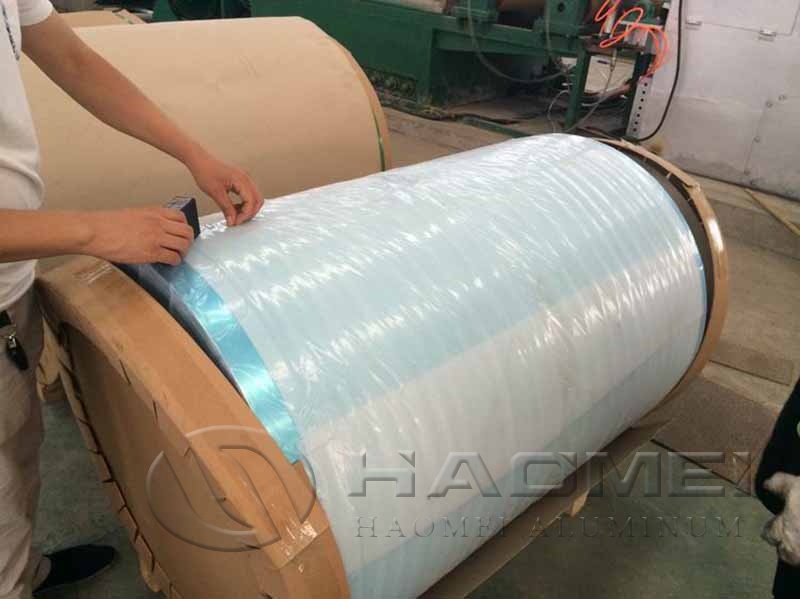
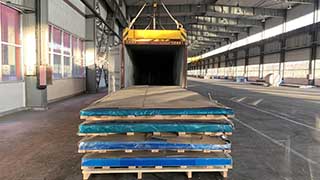
Control packaging. Surface damage during transport is one of the most frequent issues. Request PVC film, soft interleaving, dry packaging, and pallet edge guards.
-
Match finish to fabrication. Deep drawing, severe bending, or welding after polishing may damage appearance. In such cases, polishing after fabrication may be better.
Price factors to evaluate
Pricing changes with alloy, thickness, width, polish grade, anodizing, order size, and packaging. The metal component usually follows LME aluminum trends plus conversion premium. Mirror and anodized finishes carry higher processing costs because of polishing yield loss, slower inspection, and stricter packing.
When comparing quotations, separate these cost items:
- Base metal price mechanism
- Conversion charge
- Surface finishing surcharge
- Film and export packing cost
- Scrap or claim policy for appearance defects
A low quote may exclude protection film or allow broader scratch tolerance, which raises total cost after delivery.
Best-fit recommendation by application
| Application | Recommended alloy | Recommended finish |
|---|---|---|
| Indoor decorative panel | 1050, 1060, 3003 | Mechanical polish or mirror |
| Lighting reflector | 1050, 1060, 5005 | High reflectivity or anodized mirror |
| Appliance trim | 3003, 5005 | Polished with film protection |
| Humid interior or semi-outdoor use | 5005, 5052 | Anodized bright or anodized mirror |
For polished aluminum products, the most important control point is not only alloy selection. It is a written and inspectable surface specification. If appearance is critical, approve a physical sample, define defect limits, and require packaging that protects the finished face from the mill to the fabrication line.
- The Application of Stucco Embossed Aluminum SheetMay 18, 2020
The stucco embossed aluminum sheet is widely used in construction, appliances and automobile. Let’s have a loo...
- Process and Uses of Brushed Anodized Aluminum SheetsJun 06, 2022
The brushed anodized aluminum is of wide application in many apspects like architectural decoration, household...

- What Are Al 6061 t6 PropertiesNov 11, 2025
Among aluminum alloys, 6061 T6 aluminum alloy stands out as one of the most widely used materials in industria...
- Aluminum Plate Noise BarrierSep 05, 2022
Different types of aluminum sheet noise barrier are used for high-speed rail sound insulation, automobile, roo...
- The Main Alloy Grades of 5xxx Aluminium SheetJan 26, 2022
What are the pros and cons of 5xxx aluminum sheet? What are the uses of the main 5xxx alloy grade like 5005 an...
Inquiry
TABLE OF Contents

Haomei Aluminum CO., LTD.
Tel/Whatsapp: +86-15978414719
Email: sale@alumhm.com
Website: https://www.alumhm.com
Xin'an Industrial Assemble Region,Luoyang,Henan Province,China
Office Add: 1103, No.14 Waihuan Road, CBD, Zhengzhou, China