Aluminium Strip for Transformer
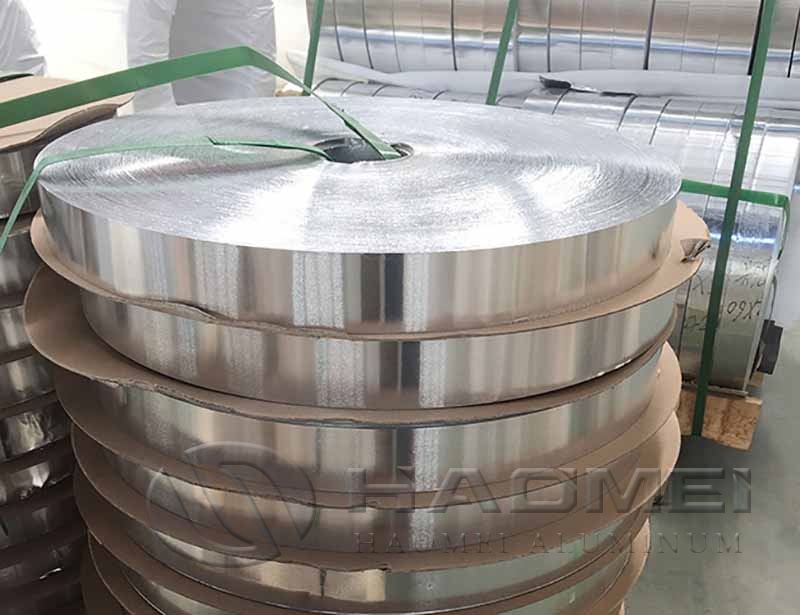
Specify aluminium strip for transformer windings with verified conductivity, temper, edges, dimensions and tests to control resistance, winding quality and loss.
Electrical conductivity consistency is the primary concern when sourcing aluminium conductor material for transformer windings. A small conductivity deviation changes DC resistance, winding temperature rise, and no-load or load-loss calculations. Material must therefore be specified as an electrical conductor, not simply as a general-purpose aluminium product.
Transformer manufacturers commonly use 1050, 1060, 1070, or 1350 aluminium, normally in O temper. The correct grade depends on the required conductivity, forming method, conductor cross-section, insulation system, and winding equipment.

Specify Conductivity Before Thickness and Price
For a winding conductor, resistance is determined by resistivity, length, and actual cross-sectional area. A material quotation that lists only width, thickness, and alloy is incomplete. Request conductivity at 20 °C, the measurement method, and the acceptance rule for each production batch.
For 1350 electrical aluminium, a commonly referenced minimum conductivity is 61% IACS at 20 °C. This corresponds approximately to a resistivity of 0.02826 Ω·mm²/m. The value should be verified against the applicable purchase specification and the supplier's certified test result. ASTM B233 includes electrical requirements for 1350 aluminum rod and wire; it is useful as a reference for electrical-grade chemistry and conductivity, but it does not replace a strip-specific agreement.
| Material option | Typical use in transformer windings | Electrical consideration | Procurement note |
|---|---|---|---|
| 1050 O | General low-voltage windings, formed conductors | Lower conductivity than high-purity electrical grades may be accepted when design permits | Confirm the actual certified conductivity, not only the alloy name |
| 1060 O | Common electrical conductor material | High aluminium content and good formability | Suitable where winding and bending performance are important |
| 1070 O | Higher-purity conductor applications | Usually selected where conductivity margin is tighter | Define chemistry limits and conductivity acceptance clearly |
| 1350 O | Electrical conductor applications | Commonly specified at 61% IACS minimum | Require a conductivity report for every delivery batch |
Aluminium requires a larger cross-sectional area than copper for equal DC resistance. Using resistivity values of approximately 0.02826 Ω·mm²/m for 1350 aluminium and 0.01724 Ω·mm²/m for annealed copper, aluminium needs about 1.64 times the conductor area. However, its density is about 2.70 g/cm³ versus copper at about 8.96 g/cm³. At equal resistance, the aluminium conductor mass is roughly half that of copper before insulation and construction effects are considered.
Do not use this ratio alone for final winding design. AC loss, joint design, radial build, insulation thickness, cooling ducts, winding tension, and short-circuit strength can alter the required geometry.
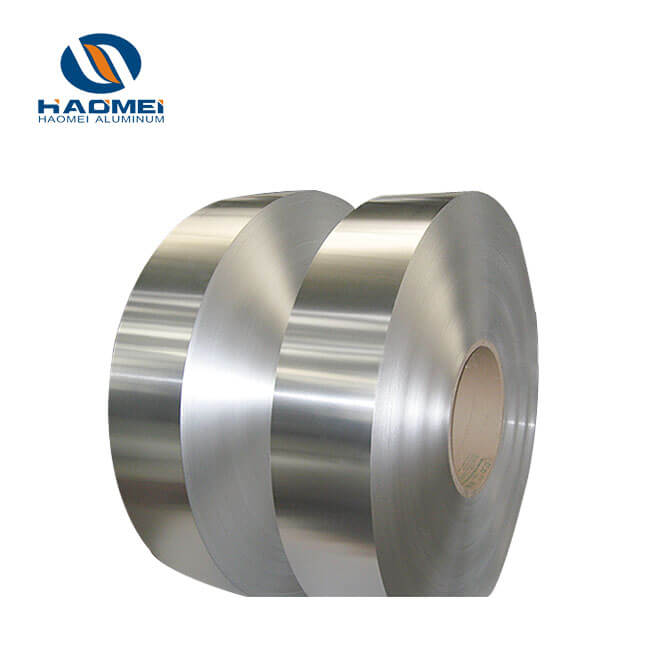
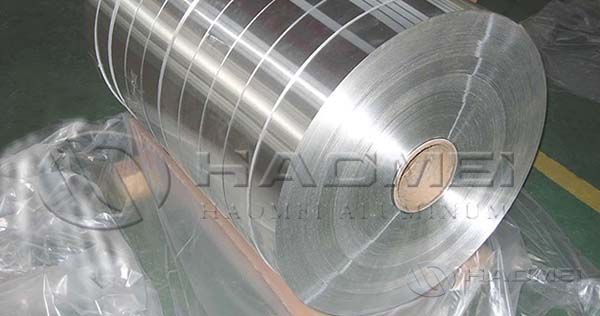
For standard electrical material availability, Aluminum Strip should be ordered with a conductor-focused specification covering alloy, temper, conductivity, dimensions, edge condition, and packaging.
Convert the Transformer Design Into a Purchase Specification
A complete order document prevents the most frequent production problems: resistance variation, burr-related insulation damage, telescoping, edge wave, and inconsistency between delivered coils.
Use this checklist before requesting quotations:
Alloy and temper: State the exact alloy designation and O temper requirement. Do not accept a substitute grade without a revised electrical calculation.
Conductivity: State a minimum %IACS value at 20 °C. Identify whether testing is required for every coil, every batch, or a defined sampling plan.
Dimensions: Specify nominal thickness and width, plus separate tolerances. Thickness tolerance directly affects conductor area and resistance.
Edge condition: Define slit edge, rounded edge, deburred edge, or edge-radius requirement. Agree on the maximum allowable burr height rather than using descriptions such as "smooth edge".
Flatness and shape: State permitted camber, edge wave, center buckle, and coil telescoping limits based on the winding machine.
Surface: Require clean, dry material free of oil, oxide powder, scratches, embedded particles, and handling marks that could compromise insulation.
Coil build: Define inside diameter, outside diameter, maximum coil mass, winding direction, and whether paper interleaving is needed.
Documentation: Require a certificate of analysis, mechanical-property report where applicable, dimensional inspection record, and conductivity test record.
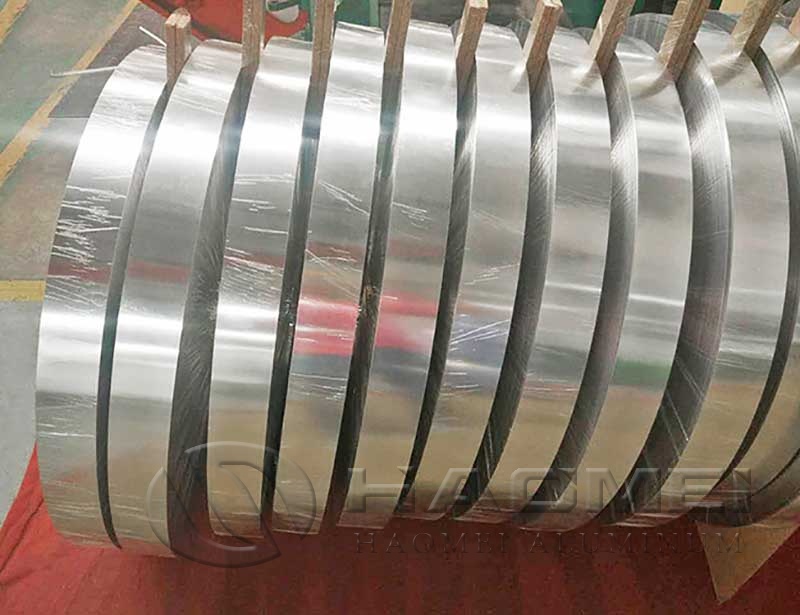
| Inspection item | Recommended control | Why it matters |
|---|---|---|
| Conductivity | Eddy-current testing to ASTM E1004, or an agreed equivalent method | Confirms electrical performance without relying on alloy designation alone |
| Chemical composition | Optical emission spectrometry; ASTM E1251 is a recognized method for aluminium alloy analysis | Detects grade substitution and excessive impurity content |
| Tensile properties | Test to ISO 6892-1 or the applicable EN 485 requirement | Confirms soft temper and stable winding behavior |
| Thickness and width | Calibrated micrometer and width gauge at agreed positions | Controls cross-section and resistance calculation |
| Burr and edge profile | Optical inspection or profile measurement with agreed limits | Reduces enamel, paper, and interlayer insulation damage |
| Surface and coil shape | Visual inspection under defined lighting; record telescoping and damage | Prevents winding stoppages and contamination |
EN 573-3 defines chemical composition for aluminium and aluminium alloys. EN 485 series documents requirements for rolled products, including mechanical properties and tolerances. These standards are useful reference points, but they do not automatically define every transformer-specific requirement. Narrow-width tolerances, burr height, coil geometry, and packaging must be written into the purchase specification.
Evaluate Samples, Testing, and Commercial Terms
First-article samples should represent the planned production route, including slitting, annealing, inspection, and packaging. A small laboratory sample cut from another product format is not sufficient evidence of stable delivered quality.
Ask the supplier to provide a sample inspection report containing measured thickness at multiple positions, width, conductivity, tensile strength, elongation, edge photos, coil identification, and test-equipment calibration status. Compare reported values with your winding design tolerance, not merely with broad standard limits.
For thin products where edge quality is especially sensitive, source trials from a Thin Aluminum Strip Supplier that can document slitting control and protective packaging. During the winding trial, record conductor breaks, insulation scoring, winding tension stability, layer alignment, and scrap rate.
Commercial comparison should separate metal value from conversion cost. A transparent quotation normally identifies aluminium market reference, alloy premium where applicable, rolling and slitting conversion, packaging, inspection, freight, and payment terms. This structure makes quotations comparable even when coil weight or delivery terms differ.
Reject material that has conductivity below the agreed minimum, thickness outside the specified tolerance, uncontrolled burrs, oil contamination, or damaged coil edges. These defects can cause higher resistance, insulation failures, unstable winding operations, and avoidable transformer rework.

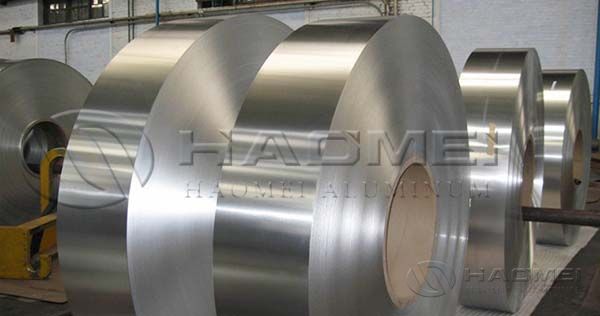
- Aluminum Strip Replacing Copper for TransformerSep 01, 2020
Aluminum strip for transformer is more economic than copper and the safety of aluminum strip stock for transfo...
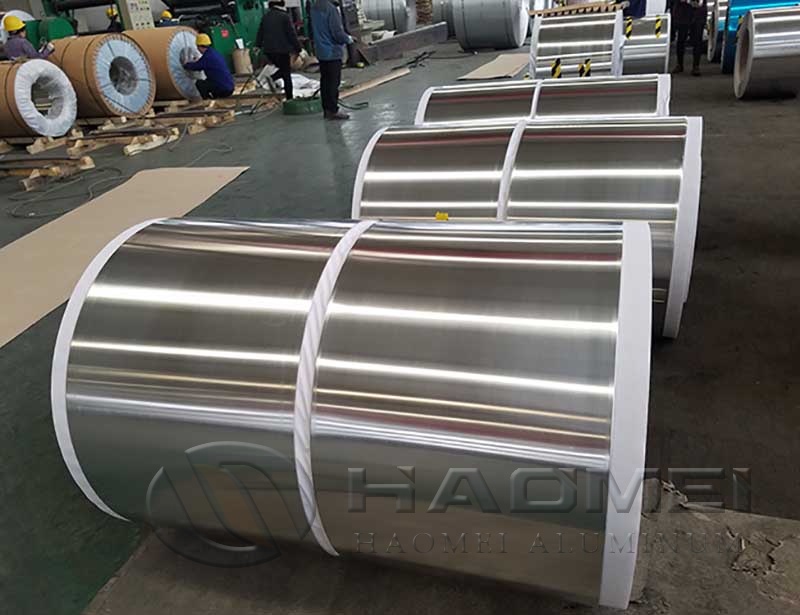
- Aluminium Strip For Transformer WindingMay 11, 2026
Aluminium strip for transformer winding: tolerances, edge safety, alloys, tests and cost factors for reliable...
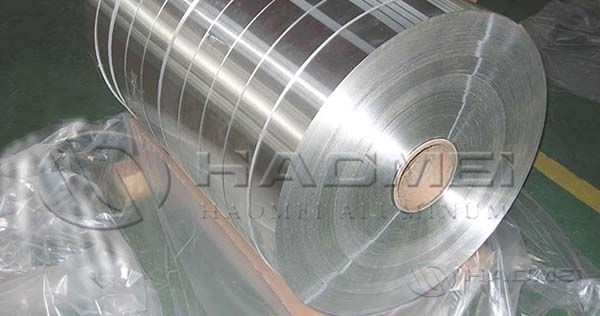
- The Alloys of Brushed Aluminum StripsJan 13, 2021
The brushed aluminum strips are of wide application because of its beautiful and anti-corrosive effect. Which...
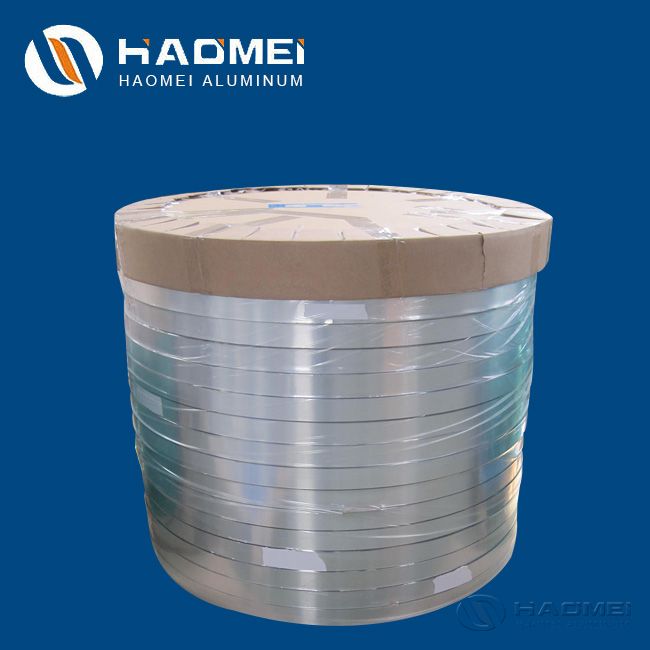
- The Manufacturing Process of Face Mask Aluminum StripsAug 19, 2020
The manufacturing process of face mask aluminum strip includes raw material selection, knives arranging, slitt...
- How to Check The Quality of Aluminum Strip for Shutter ?Sep 03, 2020
The aluminum strip for shutter should be no edge buckle and concave-convex spots, and has the needed mechanica...
Inquiry
TABLE OF Contents

Haomei Aluminum CO., LTD.
Tel/Whatsapp: +86-15978414719
Email: sale@alumhm.com
Website: https://www.alumhm.com
Xin'an Industrial Assemble Region,Luoyang,Henan Province,China
Office Add: 1103, No.14 Waihuan Road, CBD, Zhengzhou, China