Aluminium Strip For Transformer Winding
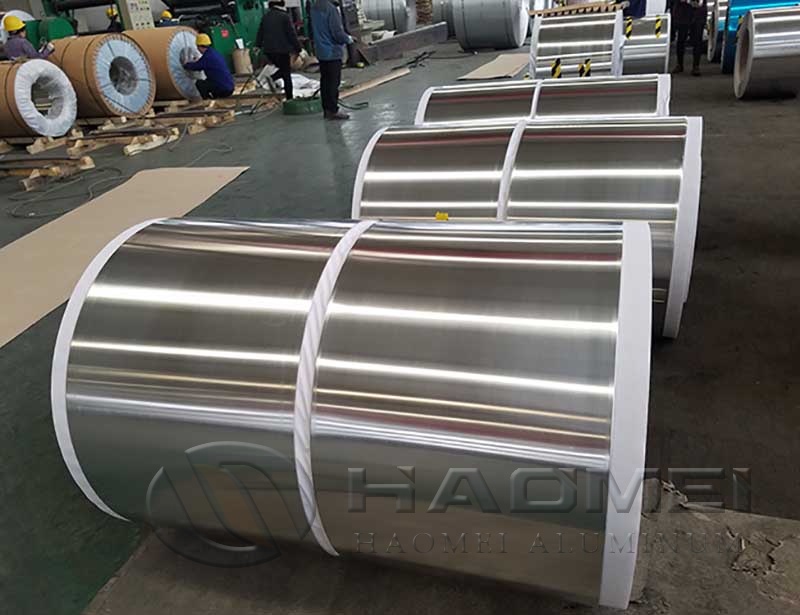
Aluminium strip for transformer winding: tolerances, edge safety, alloys, tests and cost factors for reliable dry-type and oil-filled units at plant scale.
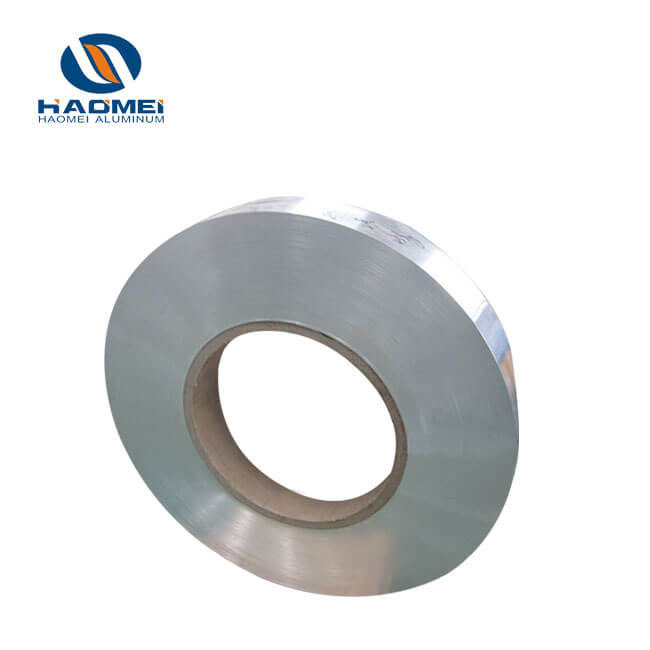
Aluminium strip used in transformer winding is not a general-purpose metal item. It becomes part of the electrical path, thermal system, and insulation structure of a transformer. For manufacturers of dry-type and oil-filled transformers, the most urgent concern is often not the alloy name alone, but whether the slit edge will damage insulation during winding.
This article focuses on edge quality as the main product feature because burrs, waviness, telescoping, and uneven camber can cause insulation scratches, partial discharge risk, rework, and scrap.

Why edge quality decides winding reliability
During foil or layer winding, aluminum passes through tension devices, insulation paper, spacers, and tooling. A sharp burr may cut Kraft paper, Nomex-type aramid paper, polyester film, or epoxy insulation. Once insulation is damaged, the transformer may still pass a simple visual check but fail under impulse, induced voltage, or thermal stress.
Transformer standards such as IEC 60076 and IEEE C57.12.00 define performance expectations for power transformers, including dielectric and temperature-rise behavior. They do not replace material inspection. The winding conductor must be controlled before it reaches the winding machine.
For transformer use, commercial purity alloys are common because they offer high conductivity and good formability. Typical choices include 1050, 1060, 1070, and 1350 aluminum, depending on regional standards and design requirements. ASTM B209/B209M and EN 485 are frequently referenced for aluminum flat products, while electrical performance is often specified separately by conductivity, resistivity, or IACS percentage.
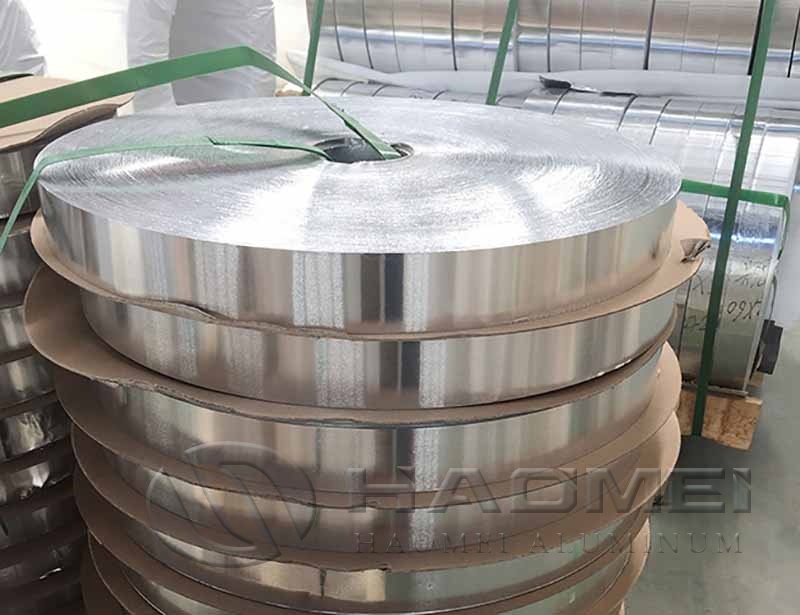
A practical sourcing specification should include edge requirements, not only width and thickness. If your design team already uses standard Aluminum Strip for multiple electrical applications, transformer winding grades should still be separated by tighter burr and cleanliness requirements.
| Item to control | Why it matters in winding | Practical inspection method |
|---|---|---|
| Burr height | Prevents insulation cuts and turn-to-turn faults | Microscope, tactile check, burr gauge |
| Camber | Keeps conductor aligned on the mandrel | Flat table measurement over set length |
| Edge cracks | Reduces fracture risk during tension winding | Visual and magnified edge inspection |
| Surface oil | Affects insulation bonding and cleanliness | Wipe test, oil residue test if specified |
| Coil tension | Prevents telescoping and edge bruising | Packaging inspection and unwind trial |
Specification checklist for transformer winding aluminum
The following checklist can be used when preparing an RFQ, incoming inspection plan, or supplier audit. It reduces ambiguity and helps align engineering, quality, and purchasing teams.
| Specification field | Recommended way to define it | Notes |
|---|---|---|
| Alloy | 1050, 1060, 1070, 1350, or approved equivalent | Confirm conductivity target with transformer design |
| Temper | O, H12, H14, or project-specific | Softer temper improves formability; harder temper supports handling |
| Thickness | State nominal value and tolerance | Tolerance affects resistance and winding size |
| Width | State slit width and tolerance | Width consistency supports neat winding layers |
| Conductivity | State minimum % IACS or resistivity at 20°C | Annealed aluminum is commonly around 61% IACS; copper is 100% IACS by definition |
| Edge condition | Deburred, round edge, or slit edge with max burr | Define measurable burr limit |
| Surface | Clean, dry, free from stains, dents, and heavy oil | Surface defects may transfer to insulation |
| Joint policy | No joints, or declared welded joints per spool | Critical for automated winding lines |
| Packaging | Eye-to-wall or eye-to-sky, moisture barrier, wooden pallet | Prevents oxidation, dents, and telescoping |
Aluminum has a density of about 2.70 g/cm³, compared with copper at about 8.96 g/cm³. Its electrical resistivity at 20°C is about 2.82 x 10^-8 ohm·m, compared with copper at about 1.724 x 10^-8 ohm·m. This means aluminum needs a larger cross-sectional area than copper for the same resistance, but it offers significant weight reduction. These values are widely published by engineering references and are used in transformer design calculations.
For high-speed winding lines, a qualified Thin Aluminum Strip Supplier should provide stable slit width, uniform coil build, and documented inspection records. Without those controls, even a correct alloy can create downtime.
Aluminum versus copper for winding cost control
The choice between aluminum and copper is not simply a metal price comparison. It affects conductor size, cooling ducts, winding window, short-circuit strength, weight, and transportation cost.
| Factor | Aluminum winding strip | Copper winding conductor |
|---|---|---|
| Density | About 2.70 g/cm³ | About 8.96 g/cm³ |
| Conductivity | Lower than copper; larger section needed | Higher conductivity; smaller section possible |
| Weight | Lower finished winding weight | Heavier winding package |
| Material price exposure | Linked to aluminum market benchmarks | Linked to copper market benchmarks |
| Mechanical strength | Requires proper design for short-circuit forces | Higher strength in many conductor formats |
| Typical advantage | Weight and cost-sensitive transformer designs | Compact, high-performance designs |
For pricing, use a transparent formula instead of a vague unit quote. A common structure is: metal benchmark plus conversion charge plus packaging plus freight plus any testing surcharge. The London Metal Exchange publishes aluminum benchmark prices, while regional premiums and conversion charges vary by order size, alloy, temper, slit tolerance, and packaging method. Because metal prices move daily, contracts should state the reference date, currency, Incoterms, and validity period.
Regulatory checks should also be documented. For electrical equipment entering the EU market, RoHS Directive 2011/65/EU may apply to restricted substances in relevant components. REACH obligations may also affect declarations for substances of very high concern. These regulations do not define conductor performance, but they do affect documentation for international supply chains.
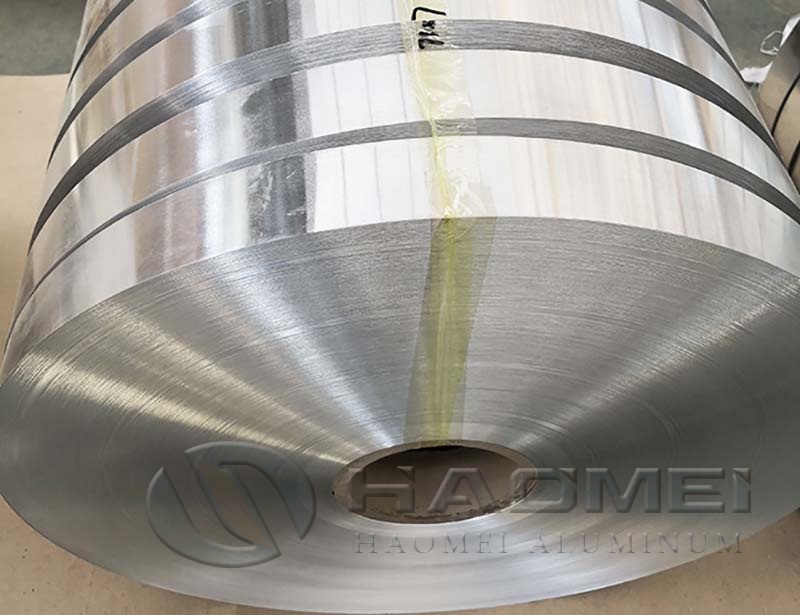
Before releasing material to production, run a controlled winding trial with the actual insulation system and machine tension. Check edge contact marks, layer alignment, surface transfer, and coil unwind behavior. Record the result with photos and measurements so future shipments can be compared against the approved sample.
Incoming inspection checklist
- Verify alloy and temper against the mill certificate.
- Measure thickness and width at multiple points across the coil.
- Inspect both edges for burrs, cracks, and wave.
- Confirm surface cleanliness with a wipe test.
- Check coil ID, OD, weight, and winding direction.
- Review packaging for moisture damage or impact marks.
- Run a short unwind test before full production release.
- Keep samples from approved and rejected batches for comparison.
A transformer winding strip that looks acceptable from the outside can still fail at the edge. Treat burr control, slit accuracy, and packaging stability as engineering requirements, not cosmetic preferences.


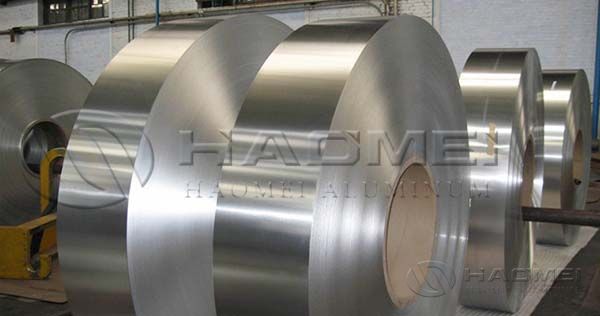
- Why Do We Choose Aluminum Fin StockJan 14, 2021
The aluminum fin stock for making radiator is of good heat dissipation, low cost, light weight and novel appea...
- How to Clean Aluminum Bendable StripsJul 30, 2020
As an experienced aluminum strip roll supplier, Haomei Aluminum knows how to clean aluminum bendable strips. T...
- 5754 Aluminum Strip Roll for VehiclesDec 03, 2020
5754 aluminum strip is a typical Al-Mg aluminum alloy,especially suitable for the manufacture of internal str...
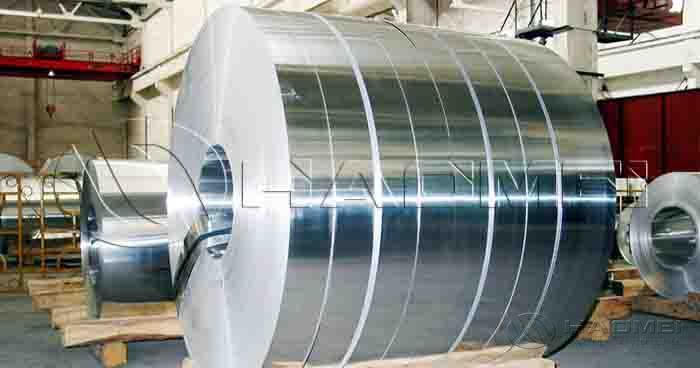
- The Manufacturing Process of Aluminum Strip for Roller ShutterFeb 15, 2022
The 3003, 3105 and 5052 aluminum strip are the common alloys for making roller shutter. To get a better surfac...
- Coated And Embossed Aluminium Strip for Roller ShutterJul 28, 2020
The coated and embossed aluminium strip for roller shutter with different colors and coating can bring better...
Inquiry
TABLE OF Contents

Haomei Aluminum CO., LTD.
Tel/Whatsapp: +86-15978414719
Email: sale@alumhm.com
Website: https://www.alumhm.com
Xin'an Industrial Assemble Region,Luoyang,Henan Province,China
Office Add: 1103, No.14 Waihuan Road, CBD, Zhengzhou, China