Black Trim Coil
Answers to common black trim coil questions on thickness, coating, fading, bending, and ordering painted aluminum coil for exterior trim work. Compare finishes.
Black trim coil is frequently searched by homeowners, contractors, building-material distributors, and metal fabricators because it solves a very practical problem: making exterior trim look clean, dark, and weather resistant without constant repainting. The questions below mirror the wording commonly seen in recent English search and social Q&A discussions. Let's have a look.

| Recent Q&A-style question | Short answer for quick comparison |
|---|---|
| Is black trim coil aluminum or steel? | Usually painted aluminum, chosen for corrosion resistance and easy brake forming. |
| What thickness should I use? | 0.019 in. is common for light trim, while 0.024 in. to 0.032 in. offers better rigidity. |
| Does black trim coil fade? | It can fade, but coating type, pigment quality, and exposure decide how fast. |
| Can I bend black trim coil without cracking it? | Yes, with the right temper, bend radius, clean brake tooling, and suitable temperature. |
| How should I order black trim coil? | Specify alloy, temper, thickness, width, coating, gloss, color tolerance, and surface protection. |
1. Is black trim coil the same as painted aluminum coil?
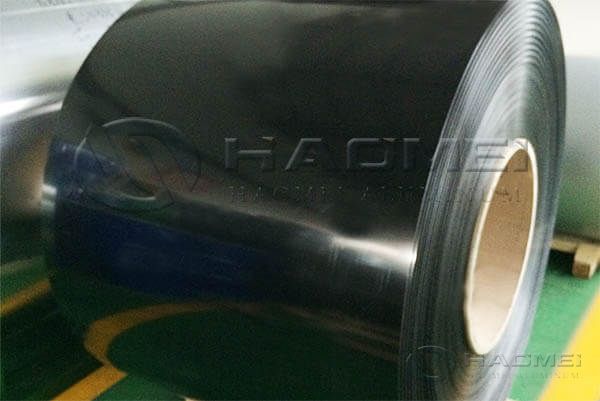
In most building applications, yes. Black trim coil is typically painted aluminum coil supplied in roll form, then cut and bent into fascia covers, window trim, door casing, rake boards, drip edges, and decorative exterior profiles. It is not normally bare aluminum painted after installation. The black finish is applied in a continuous coating line, giving better film uniformity than field painting.
The base metal is often 3003 or 3105 aluminum, with tempers such as H14, H24, or H26. These choices balance formability and stiffness. For suppliers serving construction trim markets, black is one of the most requested colors because it matches modern windows, dark rooflines, and high-contrast facade designs.
When comparing black trim coil with generic painted metal, ask whether the product is aluminum, what coating system is used, and whether the finish is intended for exterior exposure. A product such as Color Coated Aluminum Coil with PE Coating is commonly considered for standard architectural trim where good appearance and practical cost matter.
2. What thickness of black trim coil is best for fascia and window trim?
Thickness depends on the part size, wind exposure, bending design, and how flat the finished surface must appear. Thin trim can look acceptable on small profiles, but wide fascia faces may show waviness if the metal is too light.
| Nominal thickness | Common use | Practical notes |
|---|---|---|
| 0.019 in. | Light residential trim, small bends | Easy to form, economical, less rigid on wide faces. |
| 0.024 in. | Fascia, window wrap, general exterior trim | A balanced option for many contractors. |
| 0.027 in. | Wider trim and cleaner flatness | Better handling strength with moderate formability. |
| 0.032 in. | Heavier trim, commercial profiles | Stronger appearance, needs proper bending equipment. |
For new sourcing teams, 0.024 in. black trim coil is often a practical starting point. If the design includes large flat panels or long exposed runs, moving to 0.027 in. or 0.032 in. can reduce oil canning and denting. If the trim profile has many tight bends, confirm that the temper allows forming without visible whitening or coating fracture.
3. Does black aluminum trim coil fade, chalk, or get hot in the sun?
Black surfaces absorb more solar energy than light colors, so they can become hotter in direct sunlight. That heat does not usually harm the aluminum itself, but it can influence expansion, sealant choice, and handling comfort during installation. Leave reasonable movement space where long trim lengths meet, especially around windows and facade transitions.
Fading and chalking depend mainly on coating chemistry. Polyester coatings are common for residential trim and offer good value. PVDF systems are often selected for stronger UV resistance, especially in high-sun, coastal, or commercial environments. If long color life is the priority, compare color retention data rather than relying only on the color name black.
A practical way to evaluate the finish is to ask for coating thickness, gloss range, pencil hardness, T-bend performance, salt spray data, and color tolerance. For demanding exterior projects, PVDF Color Coated Aluminum Coil Stock can be considered when the finish must resist UV exposure and weathering for a longer service period.
4. Why does black trim coil scratch or show white lines when bent?
Black finishes make scratches more visible because the contrast between the dark coating and the underlying metal is strong. White lines at bends are usually caused by coating stress, a bend radius that is too tight, a hard temper, cold forming conditions, or worn brake tooling.
To reduce this risk, keep the coil protected until fabrication, use clean gloves, and avoid dragging cut pieces across rough tables. During bending, a slightly larger bend radius is usually safer than a sharp crease. If the jobsite is cold, allow the material to warm before forming, because coatings become less flexible at low temperature.
| Problem seen during forming | Likely cause | Better practice |
|---|---|---|
| White line on outside bend | Coating stretched too sharply | Increase bend radius and check T-bend rating. |
| Random scratches | Handling or dirty brake surface | Use protective film and clean tooling. |
| Edge cracking | Burrs from slitting or cutting | Use sharp blades and inspect slit edges. |
| Wavy fascia face | Metal too thin or poor support | Choose heavier gauge and improve fastening layout. |
A removable protective film can help during fabrication, but it should not stay on for too long under strong sun. Adhesive can become difficult to remove if exposed to heat and UV for extended periods.
5. What should I ask a supplier before purchasing black trim coil?
The safest approach is to describe the final application, not only the color. Black trim coil for a small residential window wrap may not need the same coating as black coil for a commercial facade near the coast. A complete inquiry reduces mismatched expectations and helps the supplier recommend a suitable product.
| Specification item | What to request |
|---|---|
| Base metal | 3003 or 3105 aluminum, with suitable temper for bending. |
| Thickness and tolerance | For example, 0.024 in. or 0.027 in., with agreed tolerance. |
| Width and roll weight | Match brake capacity, cutting plan, and transport limits. |
| Coating system | PE, modified polyester, or PVDF depending on exposure. |
| Color standard | RAL, custom sample, or approved physical color chip. |
| Gloss | Matte, satin, or semi-gloss, depending on architectural appearance. |
| Protection | Film, paper interleaving, inner diameter, packing method. |
| Testing | T-bend, adhesion, pencil hardness, salt spray, and color difference data. |
Also ask whether the black finish is one-side coated or two-side coated. Many trim applications need a high-quality exterior face and a serviceable back coat, but some profiles expose both sides. If the product will contact pressure-treated lumber, masonry, copper, or wet insulation, discuss separation layers to reduce staining or galvanic issues.
For ordering, avoid relying on color names alone. Black, matte black, jet black, ebony, and dark bronze can look similar online but different in daylight. A physical sample under natural light is far more reliable than a screen image, especially when matching windows, gutters, soffit, or roofing accessories.
- How to Slit White Aluminum Trim CoilFeb 26, 2020
How to slit the white aluminum trim coil without causing damage to the coating? The choice of blades is very i...
- How to Choose Different Types of Coated Aluminum CoilsNov 08, 2023
There are two types of coated aluminum coils: PVDF coated aluminum coil and PE coated aluminum coil. What are...
- Aluminum Trim Coil for 6 Inch GutterMay 11, 2023
6 inch gutter coil usually has two specifications: 0.032" x 15" and 0.027" x 15". Aluminum trim coil for gutte...
- What Is the Application of Colour Coated Aluminium CoilDec 11, 2019
Colour coated aluminium coil with rich trim coil colors has a wide range of applications in electronic applian...
- Coating Aluminium Coil for Composite PanelNov 17, 2020
The common kinds of the coating aluminium coil are PVDF color coated aluminum coil and PE coated aluminum coi...
Inquiry
TABLE OF Contents

Haomei Aluminum CO., LTD.
Tel/Whatsapp: +86-15978414719
Email: sale@alumhm.com
Website: https://www.alumhm.com
Xin'an Industrial Assemble Region,Luoyang,Henan Province,China
Office Add: 1103, No.14 Waihuan Road, CBD, Zhengzhou, China