Aluminium Materials for Making CTP Panel
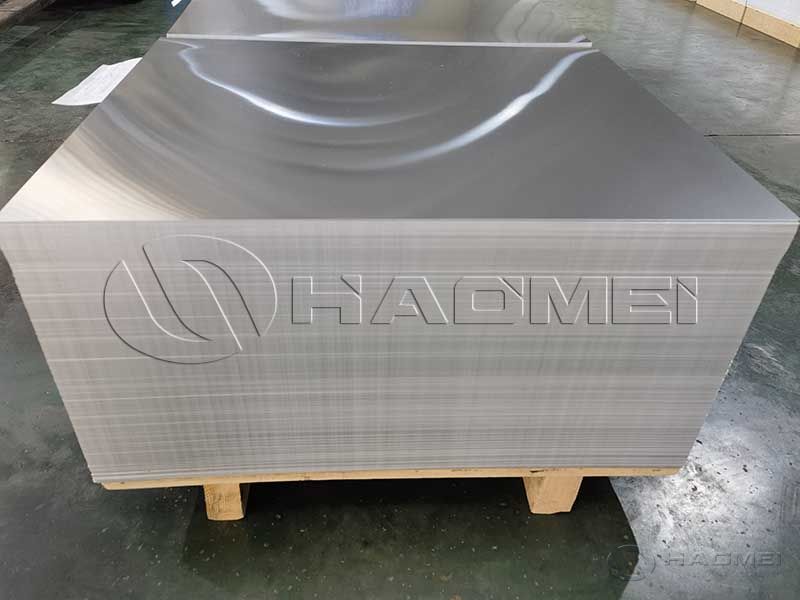
Wondering the differences between 1050 and 1060 aluminum sheets for CTP printing plates? Learn their gaps in purity, physical properties, processing & printing compatibility, plus professional selection tips for high-end fine & regular batch printing.
In the modern printing industry, the quality of CTP (Continuous Printing to Print) sheets directly determines printing clarity, print count, and stability on the printing press. Aluminum substrate, as the core material of CTP sheets, is the key foundation for controlling sheet quality. Many CTP sheet manufacturers' raw material procurement personnel often encounter this question: what is the difference between 1050 and 1060 aluminum sheets, both using 1-series pure aluminum substrates?
The core material differences between 1050 and 1060 aluminum substrates: The core requirements for aluminum substrates in CTP printing are a smooth, flawless surface, uniform grain size, stable thermal and electrical conductivity, no cracking when bent, and strong coating adhesion. These fundamental differences in performance stem from the different material compositions of the two aluminum sheets.

Both 1050 and 1060 belong to the industrial pure aluminum series, containing no alloying elements. They are pure in texture and have excellent rust resistance, perfectly meeting the basic requirements of printing substrates. However, their core parameters differ significantly:
1. Purity Difference
1050 aluminium sheet has an aluminum content ≥99.5%, representing the industry's standard high-purity aluminum specification; 1060 aluminum sheet has an aluminum content ≥99.6%, slightly higher in purity than 1050, with stricter control over impurities such as iron and silicon, resulting in better material uniformity. This 0.1% difference in purity is the core reason for the performance differentiation between the two sheets.
2. Physical Property Difference
1060 aluminum has higher purity, superior ductility, thermal and electrical conductivity, and better electrical conductivity than 1050, with a finer and more uniform grain structure. 1050 aluminum sheet, due to its slightly higher impurity content, has a slightly higher hardness than 1060, better overall rigidity, is less prone to slight deformation, and has lower production costs, offering excellent value for money.
3. Differences in Processing Compatibility
1060 aluminum is softer, less prone to cracking during deep drawing, bending, and cutting, and has a higher surface flatness; 1050 is slightly more rigid, with slightly better resistance to minor impacts and wear, suitable for routine simple processing and forming.
Printing Compatibility of the Two Aluminum Plates
Based on the actual working conditions of CTP plate making and printing, we analyze the practical performance of 1050 and 1060 aluminum plate substrates from the perspective of core printing needs.
1060 Aluminum Plate: Preferred Substrate for High-End Fine Printing
1060 aluminum is a mainstream substrate for mid-to-high-end CTP, boasting excellent purity, flatness, and uniformity. The surface is clean and flawless, with good hydrophilicity, accurate dot reproduction, and stable ink-water balance, perfectly achieving high-definition printing effects such as fine text and gradient colors.
It has good thermal conductivity, allowing for rapid temperature uniformity during high-speed printing, eliminating problems such as board warping and coating peeling. It has strong print durability, and large-volume printing is less prone to misregistration and blurry printing. Simultaneously, the coating adhesion is high, making it less prone to peeling and extending its service life. The drawback of 1050 aluminum plate is its relatively soft texture and insufficient rigidity. Improper storage and transportation can easily leave indentations. Its price is also slightly higher, making it only suitable for high-quality, fine printing applications.
1050 Aluminum Plate: A Cost-Effective Choice for Regular Batch Printing
1050 is a general-purpose CTP substrate, offering high cost-effectiveness and stable performance. Compared to 1060, it has better hardness and rigidity, is more resistant to impacts and deformation, and has a higher tolerance for errors during storage, transportation, and repeated use, making it less prone to surface damage.
It can meet the needs of regular printing such as books, packaging, and posters, providing stable and flawless plate making. However, its material purity is limited, and its performance in fine dot reproduction, temperature equalization speed, and long-term stability in high-volume printing is weaker than 1060 aluminum plate. It is the cost-effective first choice for small and medium-sized printing plants and regular printing orders.
Additional Tips for Selecting CTP Aluminum Plate Substrates
1. Adhere to National Standards: High-quality CTP aluminum plate substrates must meet industry national standards. The mainstream thickness is 0.26mm or 0.27mm, and the thickness tolerance should be controlled within ±0.01mm to avoid warping and misregistration issues caused by uneven thickness.
2. Pay Attention to Plate Surface Processing: Whether using 1050 or 1060, the substrate must be precision cold-rolled, leveled, and degreased. The surface should be free of oxidation color differences and wavy lines to ensure plate-making stability.
3. Choose the proper one: For routine printing, there's no need to blindly choose 1060 substrate, which only increases costs. For high-end, fine printing, do not choose 1050 just because it's cheaper, as this can lead to blurry dots, increased scrap rates, and ultimately, more harm than good.
- Different Tempers of 3003 Aluminum SheetJan 20, 2025
3003 aluminum sheet is usually supplied in H12, H22, H14, H24, H26, H112, etc. 3004 h14 aluminum is used for b...
- How to Ensure Quality of Prepainted Aluminum CoilSep 05, 2022
The prepainted aluminum coil refers to aluminum coils that are coated with one or several layers of organic co...
- How to Choose Sunlight Reflector Aluminum SheetNov 04, 2025
In photovoltaic power plants, building lighting, greenhouses, and other applications, the sunlight reflector s...
- Aluminum Cap MaterialMay 05, 2022
3105 aluminum sheet is a popular aluminum bottle cap material, especially for sparkling drinks. It is a pure a...
- What Is 14 Gauge Aluminum ThicknessJun 14, 2023
14 gauge aluminum thickness is equal to 1.628mm. Other popular aluminum sheet thickness is 3mm and 6mm aluminu...
Inquiry
TABLE OF Contents

Haomei Aluminum CO., LTD.
Tel/Whatsapp: +86-15978414719
Email: sale@alumhm.com
Website: https://www.alumhm.com
Xin'an Industrial Assemble Region,Luoyang,Henan Province,China
Office Add: 1103, No.14 Waihuan Road, CBD, Zhengzhou, China