1 4 Aluminum Checker Plate
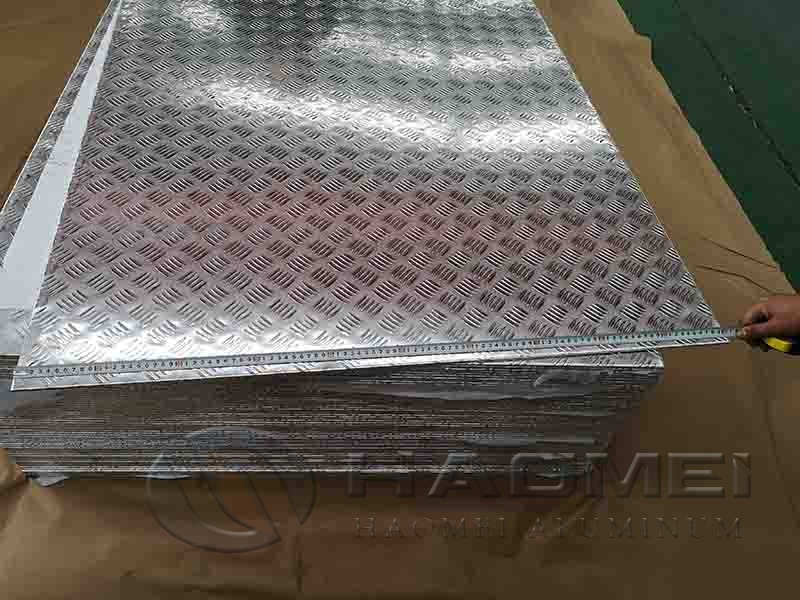
Compare 1/4 aluminum checker plate alloys, tolerances, weight, cost drivers, certificates, and QA checks for safer volume procurement.
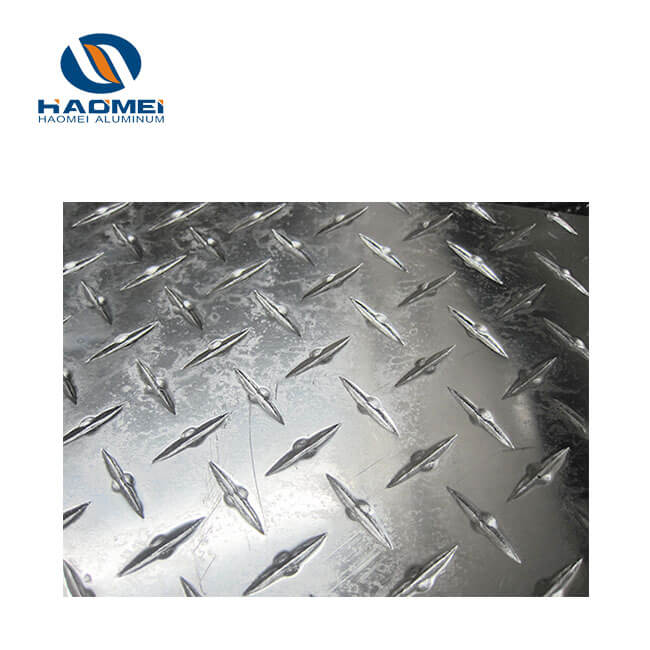
A 1/4 aluminum checker plate normally means a 0.250 in, or 6.35 mm, base metal thickness before the raised pattern is counted. This distinction matters. Many disputes in volume orders start when one side measures over the diamond or five-bar pattern while the drawing requires base thickness.
For transport floors, dock plates, stair treads, toolboxes, wall protection, and service platforms, the top concern is not only price per pound. It is whether the delivered plate matches the specified alloy, temper, base thickness, flatness, pattern height, and certificate requirements.

Specify the Thickness Correctly
For quarter-inch checker plate, write the thickness as base metal thickness: 0.250 in nominal, 6.35 mm nominal. Pattern height is additional and varies by mill, pattern type, and tooling wear.
Use this wording in purchase documents:
- Thickness: 0.250 in base metal, raised pattern excluded.
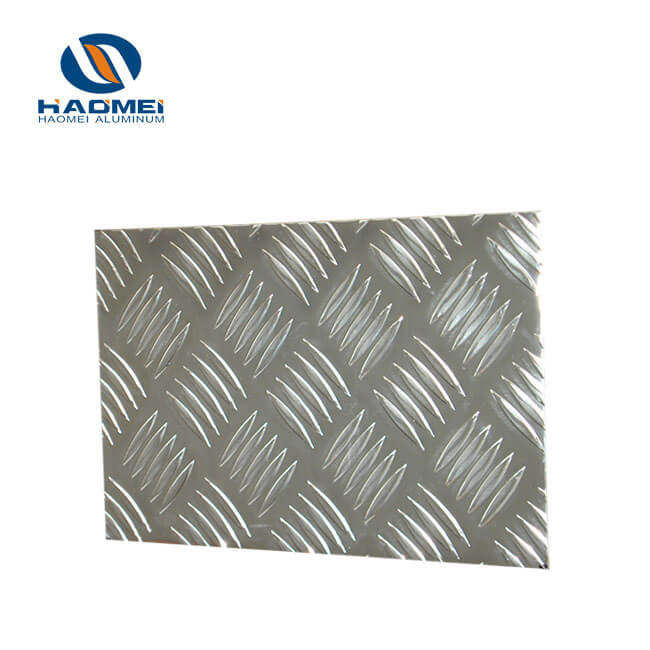
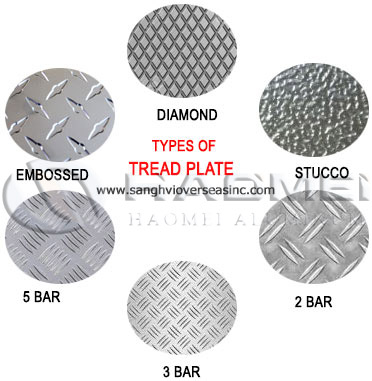
- Pattern: diamond, five-bar, or mill-defined tread pattern.
- Alloy and temper: for example, 3003-H22, 5052-H32, or 6061-T6.
- Standard: ASTM B632/B632M for aluminum-alloy rolled tread plate, or EN 1386 for European tread plate specification.
- Certification: mill test certificate with heat or coil traceability.
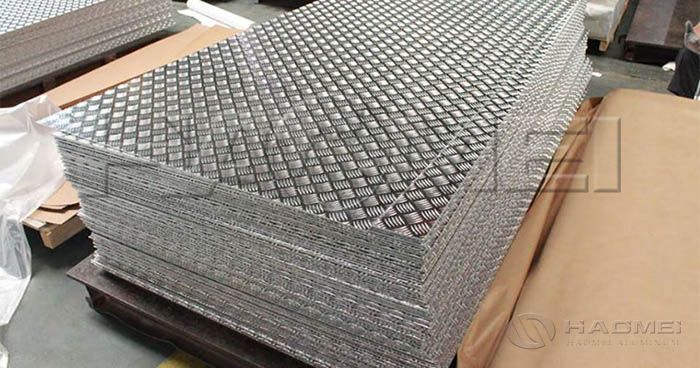
In product families, Aluminum Tread Plate covers several patterns and alloys, while 5 Bar Aluminium Checker Plate is often selected where drainage, visual direction, and footwear contact are important.
| Item to define | Recommended wording | Why it prevents claims |
|---|---|---|
| Thickness | 0.250 in base metal | Avoids measuring over pattern |
| Metric equivalent | 6.35 mm base metal | Supports global drawings |
| Pattern | Diamond or five-bar | Confirms tooling and surface appearance |
| Temper | H22, H32, T6, as required | Controls strength and bend behavior |
| Surface | Mill finish, bright, anodized, or painted | Prevents appearance mismatch |
| Certificate | MTC to ASTM or EN standard | Confirms chemistry and mechanical values |
Alloy Selection by Application
Aluminum density is about 2.70 g/cm3, compared with carbon steel at about 7.85 g/cm3. This is why a quarter-inch aluminum tread plate is widely used when reducing dead weight matters.
Approximate weight for 0.250 in flat aluminum plate is 3.53 lb/ft2, or 17.2 kg/m2, before adding the raised pattern. The tread pattern may add several percent depending on design. Ask the mill for theoretical weight per square meter from its pattern tooling.
| Alloy and temper | Typical use | Strength and fabrication notes |
|---|---|---|
| 3003-H22 | Decorative walls, light floors, kick plates | Good corrosion resistance and formability; not for high structural loads |
| 5052-H32 | Marine floors, wet areas, vehicle bodies | Better corrosion resistance than 3003; good fatigue performance |
| 6061-T6 | Ramps, platforms, structural parts | Higher strength; bending radius must be planned to reduce cracking risk |
ASTM B209/B209M lists mechanical property requirements for many aluminum rolled products. Common published minimum values include 6061-T6 tensile strength around 42 ksi, or 290 MPa, and yield strength around 35 ksi, or 240 MPa. Always verify the exact value against the mill certificate and the governing standard edition used in the contract.
For slip resistance, do not rely on pattern appearance alone. If workplace safety is the main concern, require testing by a recognized method such as ASTM E303, DIN 51130, or another method accepted in the project location. Surface oil, water, dust, footwear, and plate direction can change the measured result.
Production Route and Quality Control
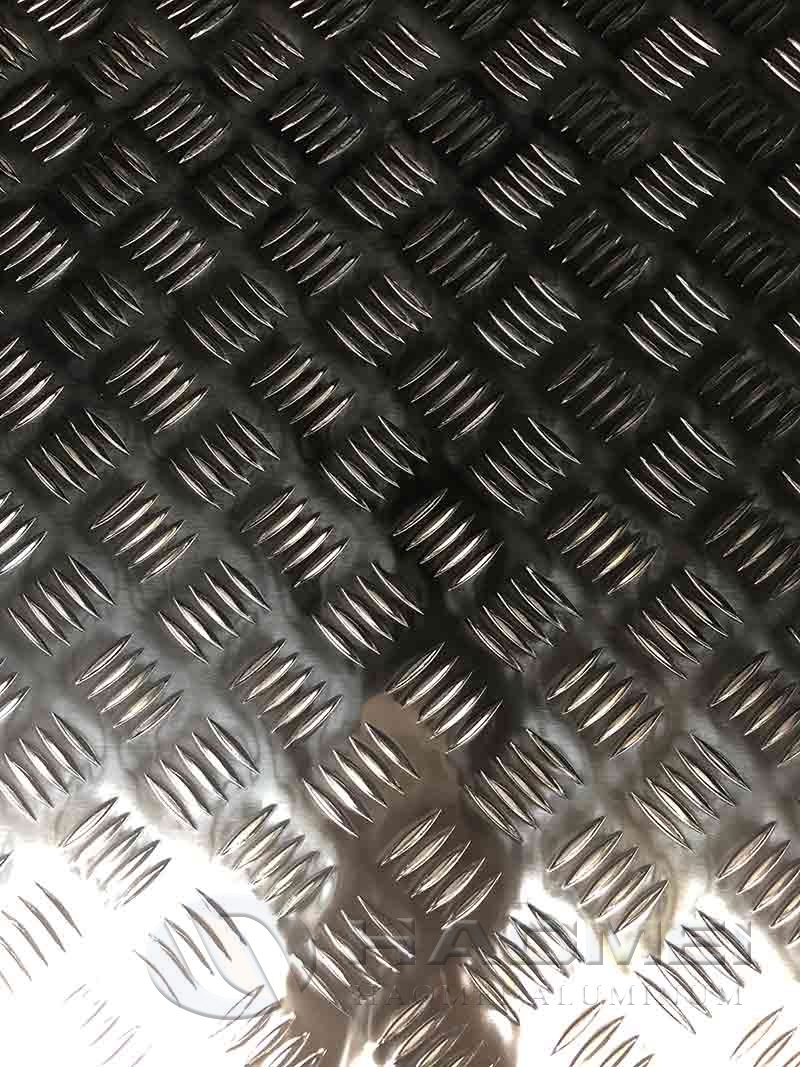
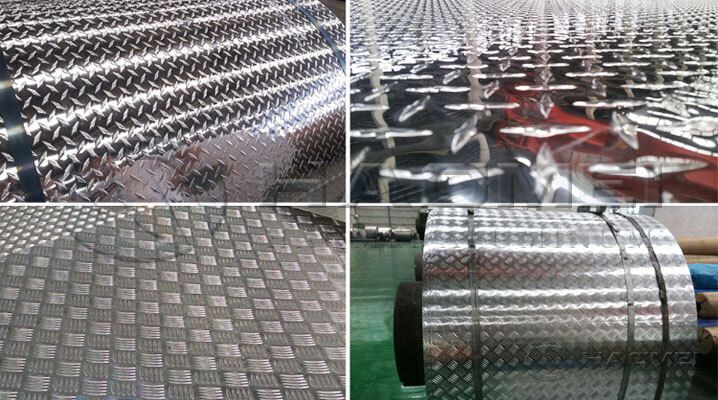
Checker plate is generally produced by hot rolling or cold rolling aluminum through patterned rolls. The raised tread is formed by pressure, not by welding separate material on top. This gives good durability, but it also means pattern consistency depends on roll condition, rolling pressure, and coil or plate leveling.
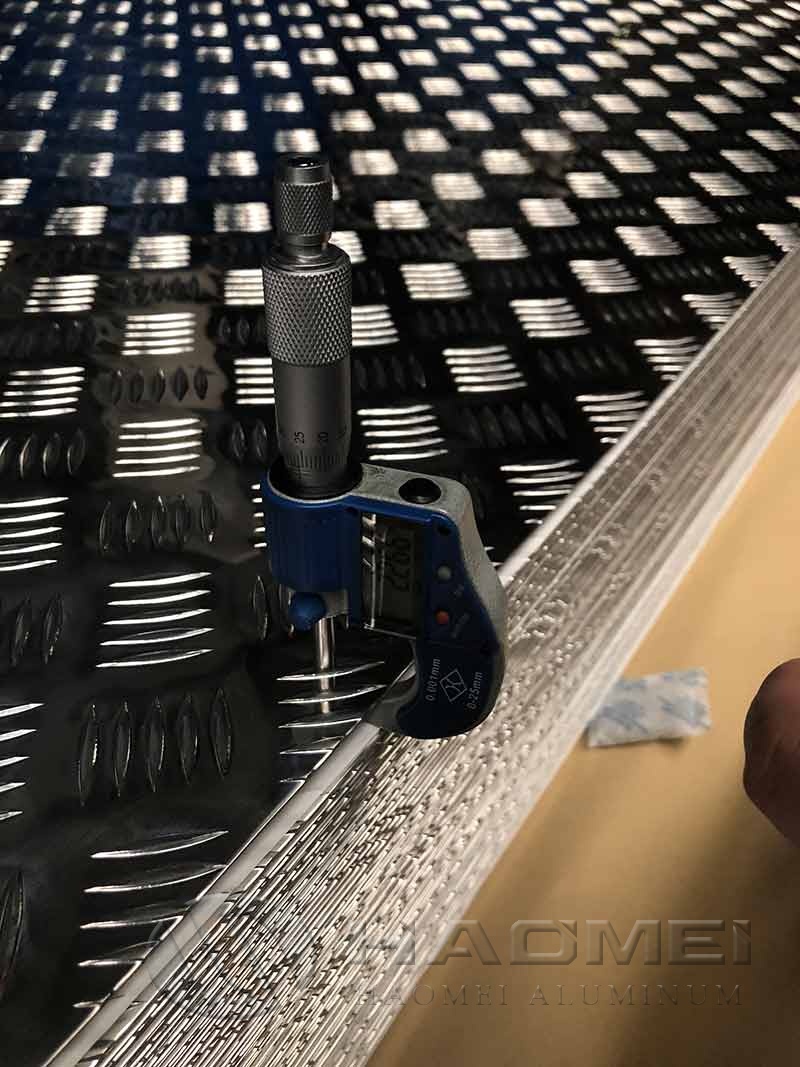
A practical inspection plan should cover both dimensional and visual checks.
| Check point | Tool or document | Acceptance focus |
|---|---|---|
| Alloy chemistry | Mill test certificate | Matches ordered alloy, such as 5052 or 6061 |
| Base thickness | Micrometer away from tread | Within ordered tolerance |
| Pattern height | Depth gauge or profile method | Consistent tread across lot |
| Flatness | Straightedge or table inspection | Suitable for cutting and installation |
| Surface | Visual inspection under agreed lighting | No heavy scratches, stains, dents, or roll marks beyond agreement |
| Packaging | Photos before shipment | Moisture barrier, edge protection, pallet strength |
For CNC cutting, routing, punching, or bending, ask for test panels before full production when using 6061-T6. Quarter-inch 6061-T6 has higher strength, but it is less forgiving in tight bends than 3003 or 5052.
Cost Drivers and Market Timing
The transaction price normally has three main parts: aluminum metal value, regional premium, and fabrication or conversion charge. The London Metal Exchange publishes benchmark aluminum prices, and regional premiums are commonly assessed by agencies such as Fastmarkets, S&P Global Commodity Insights, and others. Fabrication charges depend on alloy, thickness, width, pattern, surface finish, packing, and quantity per release.
Do not compare offers only by unit price. Compare yield and delivered usability.
| Cost factor | What to ask | Procurement risk if ignored |
|---|---|---|
| Metal basis | LME month average or fixed price | Exposure to market swings |
| Regional premium | Midwest, European duty-paid, or local basis | Hidden metal cost difference |
| Conversion charge | Pattern, alloy, temper, width | False low quote on non-equivalent material |
| Tolerance | Standard or tighter tolerance | Extra scrap during fabrication |
| Packaging | Export seaworthy or domestic pallet | Water staining and edge damage |
| Duties and carbon rules | Country-specific customs review | Landed cost variance |
Market cycles are influenced by primary aluminum smelter energy costs, alumina availability, scrap flows, construction demand, vehicle production, and freight capacity. In the United States, Section 232 aluminum measures have applied a 10% tariff to many aluminum imports since Proclamation 9704, subject to country arrangements and later changes. In the European Union, CBAM includes aluminum, with transitional reporting from October 2023 and financial obligations scheduled from 2026. These rules can affect landed cost and documentation workload.
Ordering Checklist for 1/4 in Checker Plate
Use one controlled specification document per order. Attach drawings when hole patterns, cut-to-size dimensions, or bend lines are needed.
- State base thickness: 0.250 in, 6.35 mm, pattern excluded.
- Select alloy and temper based on service environment and fabrication method.
- Define pattern type, orientation, and acceptable pattern height range.
- Name the standard: ASTM B632/B632M, ASTM B209/B209M, EN 1386, or EN 485 as applicable.
- Require mill certificates and traceability to heat, coil, or lot.
- Confirm weight calculation method, including whether raised tread is included.
- Agree on inspection level, sampling quantity, and claim procedure before shipment.
- Specify moisture protection, pallet weight limit, edge guards, and container loading photos.
- Review trade duties, sanctions screening, REACH or RoHS declarations if relevant.
- Lock pricing formula: metal basis, premium, conversion, freight, and currency.
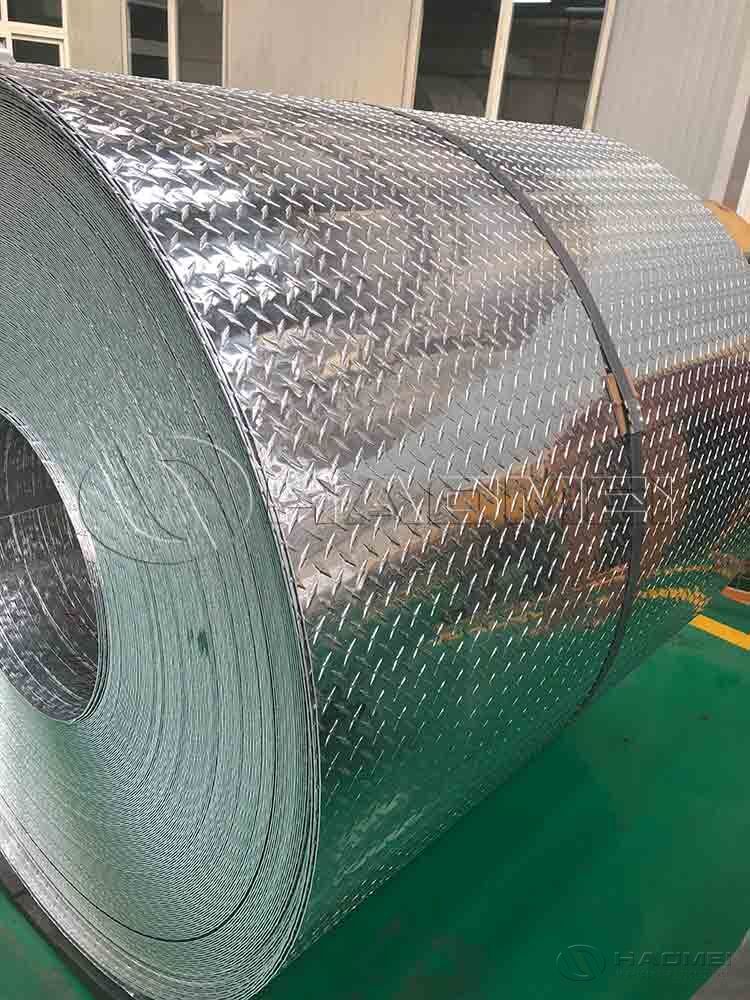
- Aluminum 5 Bar Tread Plate Sizes, Thicknesses, and WeightsOct 09, 2026
High-strength aluminum 5 bar tread plate features lightweight, corrosion resistance and superior anti-slip per...
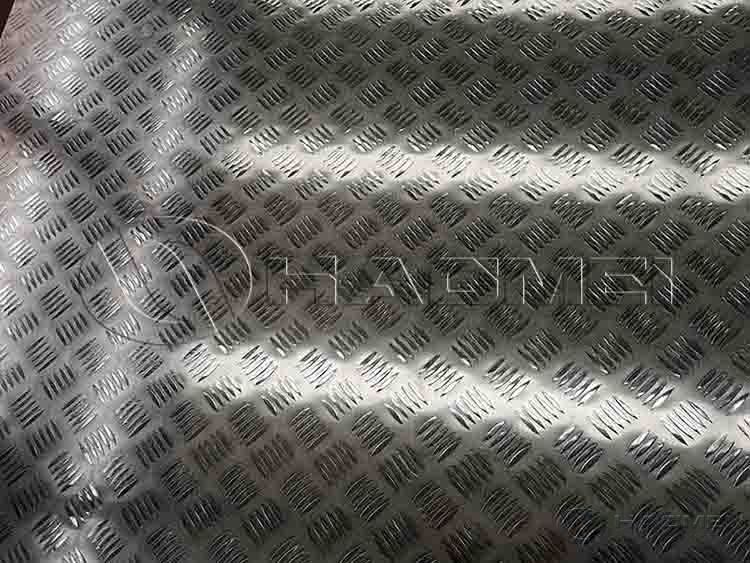
- 6000 Series Aluminum Tread PlateFeb 02, 2026
6000 series aluminum tread plate, especially 6061 aluminum tread plate, is widely used in Canada, USA, Germany...
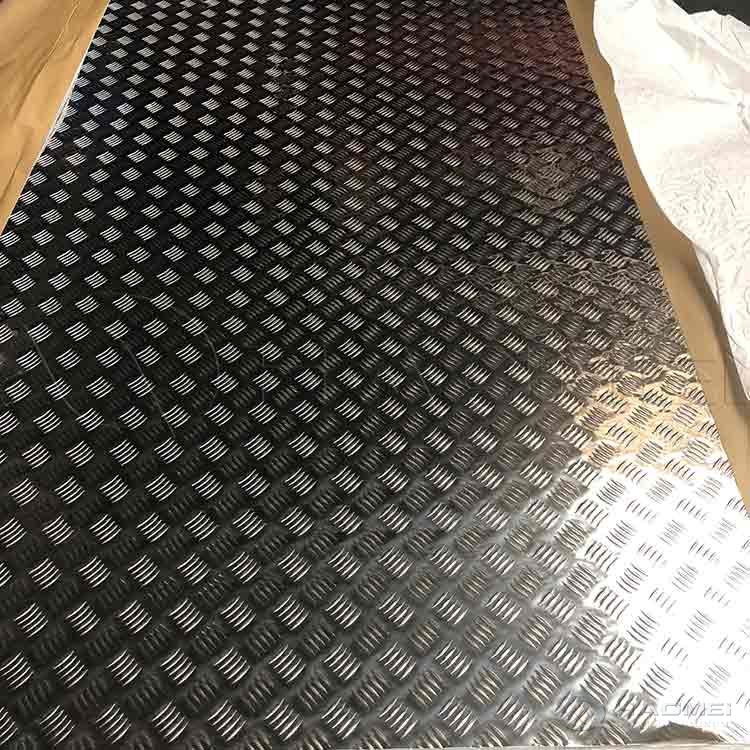
- How to Choose Embossed Aluminum SheetJan 11, 2024
The common embossed aluminum plate is orange peel embossed aluminum plate. How to calculate its thickness and...
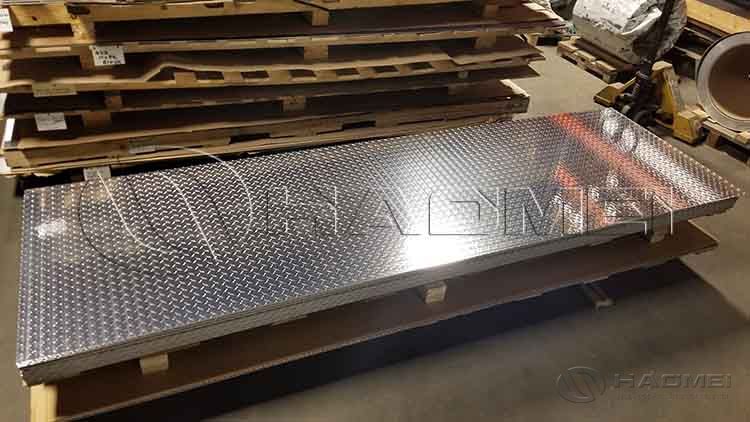
- Aluminum Diamond Plate for Cold StorageAug 12, 2025
Cold storage facilities are subject to long periods of low temperature and high humidity, placing stringent de...
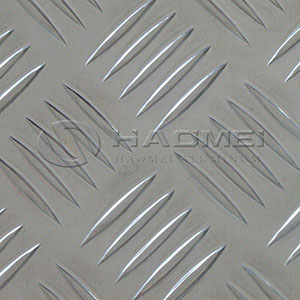
- What Are The Uses of Aluminum 5 Bar Tread PlateFeb 17, 2020
Aluminum 5 bar tread plate is a popular kind of aluminum tread plate. With different pattern design and alumin...
Inquiry
TABLE OF Contents

Haomei Aluminum CO., LTD.
Tel/Whatsapp: +86-15978414719
Email: sale@alumhm.com
Website: https://www.alumhm.com
Xin'an Industrial Assemble Region,Luoyang,Henan Province,China
Office Add: 1103, No.14 Waihuan Road, CBD, Zhengzhou, China