How Much Does a 4x8 or 4x10 Aluminum Sheet Weigh
In industries such as sheet metal fabrication, custom tooling, outdoor curtain walling, and equipment manufacturing, 4×8-foot and 4×10-foot sheets are the most common standard sizes for aluminum plates. Procurement, construction, and technical personnel o
In industries such as sheet metal fabrication, custom tooling, outdoor curtain walling, and equipment manufacturing, 4×8-foot and 4×10-foot sheets are the most common standard sizes for aluminum plates. Procurement, construction, and technical personnel often need to know the precise weight of a single sheet of a specific thickness when calculating costs, planning logistics, or designing for load-bearing requirements.
The generally accepted density for commercially pure aluminum and common aluminum alloys (such as 3003, 5052, and 6061) is 2.7 g/cm³ (2700 kg/m³); this is the industry standard for calculations, and any margin of error is negligible. Standardized unit conversions are also applied: 1 foot = 0.3048 meters and 1 inch = 25.4 millimeters. Converting all dimensions to meters and millimeters before calculation ensures greater accuracy.
I. Weight Calculation for a 4×8-Foot, 1/4-Inch Thick Aluminum Plate
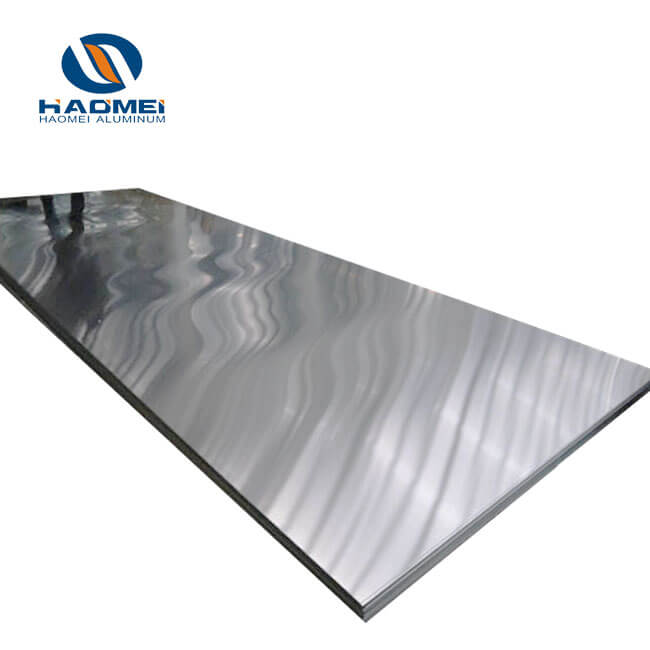
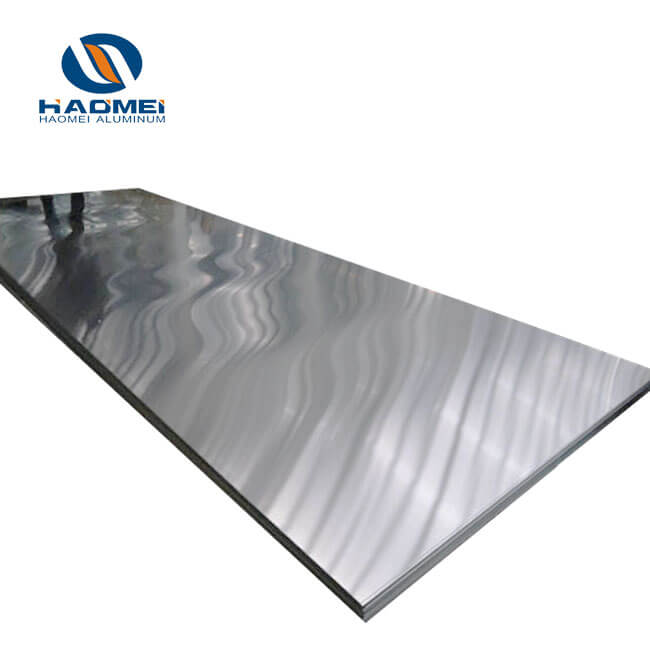
The 4×8-foot aluminum plate is the most widely used standard large sheet on the market, suitable for the vast majority of conventional fabrication applications. 4x8 aluminum sheet 1/4 is a medium-to-thick plate; offering high hardness and excellent load-bearing capacity, it is frequently used for equipment panels, mold backing plates, curtain wall substrates, and similar applications.
Firstly, convert the dimensions: the sheet measures 4 feet by 8 feet with a thickness of 1/4 inch (0.25 inches). Length: 4 feet = 1.2192 m; width: 8 feet = 2.4384 m; thickness: 0.25 inches = 6.35 mm.
Aluminum plate weight calculation formula: Weight (kg) = Length (m) × Width (m) × Thickness (m) × Density (2700 kg/m³).
Substituting the values: 1.2192 × 2.4384 × 0.00635 × 2700. Step-by-step calculation shows the sheet volume is approximately 0.0189 m³, resulting in a final weight of approximately 51.03 kg per sheet.
Based on industry practice, the actual weight may fluctuate between 50.5 kg and 51.5 kg due to factors such as rolling tolerances, surface oxide layers, and protective films. This falls within a normal, reasonable margin of error; therefore, the standard value of 51 kg can be used directly for daily accounting, quoting, and load-bearing calculations.
II. Weight Calculation for 4×10 ft, 0.040-inch Thick Aluminum Sheets
The 4×10 ft sheet is an oversized aluminum product with a large surface area, making it suitable for applications such as large-scale paneling, suspended ceiling decoration, and casings for large equipment. The 040 aluminum sheet 4x10 is a thin aluminum sheet; it is lightweight and easy to bend or process, balancing flatness with flexibility, and is a common specification for decorative work and light-gauge sheet metal applications.
Standardized unit conversion: Length and width of 4 ft × 10 ft, thickness of 0.040 inches. 4 ft = 1.2192 m; 10 ft = 3.048 m; 0.040 inches = 1.016 mm.
Applying the standard weight formula: 1.2192 × 3.048 × 0.001016 × 2700. Calculations show the volume is approximately 0.00377 m³, and the precise weight per sheet is approximately 10.18 kg.
Compared to medium-to-thick plates, tolerance variations have a smaller impact on this thin aluminum sheet. The actual weight of finished products on the market generally remains stable between 10 kg and 10.3 kg. Its light weight makes manual handling and installation much easier, significantly reducing labor costs during construction.
III. Key Weight Comparison of Two Mainstream Aluminum Sheet Specifications
The 4×8 ft, 1/4-inch aluminum sheet features standard dimensions, substantial thickness, and significant weight; it prioritizes high strength and stability, making it suitable for load-bearing, wear-resistant, and structural support applications. In contrast, the 4×10 ft, 0.040-inch aluminum sheet offers a larger surface area, thin profile, and light weight; it prioritizes ease of processing, ease of installation, and aesthetic appeal, making it suitable for decoration, light cladding, and advertising substrates.
Many people often confuse the weight differences associated with dimensions and thickness; the primary error lies in overlooking unit conversions and calculating directly using feet or inches, which leads to numerical discrepancies. This is precisely why the industry has standardized on metric units for weight calculations, as this approach maximizes accuracy regarding procurement quantities, transport load capacities, and engineering designs.



- What Are Popular 3000 Aluminum AlloysAug 06, 2024
3000 aluminum is the most widely used rust-proof aluminum alloys, including 3003, 3004, 3005, 3104, 3105, etc...
- The Main 1000 Aluminum AlloysJan 16, 2023
The popular alloy grades of 1000 aluminum are 1050, 1060 and 1100. The purity can reach more than 99.00%. What...
- Aluminum Substrate for Offset Printing PS CTP PlateMar 28, 2024
The PS/CTP aluminum substrate is made of 1050 aluminum, 1060 aluminum sheet and 1070 aluminum sheet, with alu...
- 1050 AlloyMar 12, 2026
1050 alloy aluminum for electrical, forming, and anodizing: purity, conductivity, temper selection, QA checkli...
- Alu Sheet for PCBDec 14, 2021
Alu sheet for PCB is widely used in the electronic field because of its multiple advantages like good heat dis...
Inquiry
TABLE OF Contents

Haomei Aluminum CO., LTD.
Tel/Whatsapp: +86-15978414719
Email: sale@alumhm.com
Website: https://www.alumhm.com
Xin'an Industrial Assemble Region,Luoyang,Henan Province,China
Office Add: 1103, No.14 Waihuan Road, CBD, Zhengzhou, China