Aluminum 6061 T6 VS 5052 H32 Aluminum
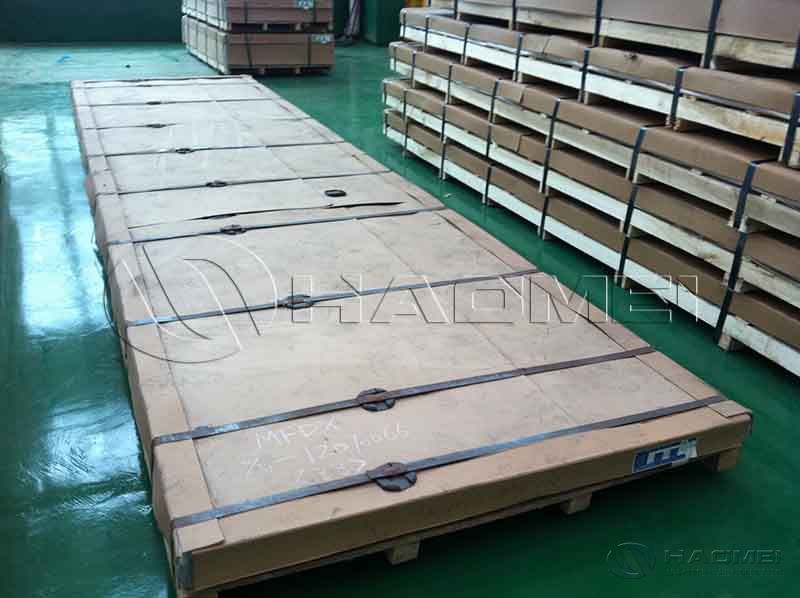
In industrial sectors such as sheet metal fabrication, precision machining, equipment structural components, new energy vehicle housings, and marine hardware, 6061 T6 and 5052 H32 are the two most widely used aluminum alloys. While they share similar appe
In industrial sectors such as sheet metal fabrication, precision machining, equipment structural components, new energy vehicle housings, and marine hardware, 6061 T6 and 5052 H32 are the two most widely used aluminum alloys. While they share similar appearances and offer excellent cost-performance ratios, they differ significantly in core properties, processing characteristics, and suitable applications. What exactly sets them apart?

I. Base Material Characteristics
The fundamental differences between these two aluminum materials stem from their alloy compositions and strengthening processes, which dictate their overall performance profiles.
Aluminum 6061 t6 (6000-series Al-Mg-Si alloy): A ternary aluminum-magnesium-silicon alloy, it is a classic heat-treatable, precipitation-hardened alloy. The T6 temper represents an industry-standard strengthening process involving solution heat treatment followed by artificial aging; this stabilizes the internal crystal lattice and relieves internal processing stresses, resulting in significantly enhanced hardness and strength, as well as superior dimensional stability. It is a hard aluminum alloy specifically suited for structural components.
5052 H32 (5000-series Al-Mg rust-proof alloy): Primarily an aluminum-magnesium alloy, it cannot be strengthened via heat treatment and relies instead on work hardening (strain hardening) to enhance its properties. The H32 temper indicates a stabilized strain-hardened condition achieved through cold working followed by low-temperature annealing; this increases hardness while retaining sufficient toughness. Widely recognized in the industry as a "soft, rust-proof aluminum," it excels in formability and corrosion resistance.
II. Mechanical Properties
1. Strength and Hardness: 6061 T6 Holds the Advantage
Strengthened by heat treatment, 6061 T6 boasts superior overall mechanical properties. It offers a tensile strength exceeding 276 MPa and a Brinell hardness of approximately 95 HBW. With stable yield strength and excellent resistance to deformation and compression, it can withstand sustained static and dynamic loads without easily deforming.
5052 h32 aluminum relies on work hardening, resulting in lower hardness and strength. Its tensile strength is far below that of 6061 T6; it cannot withstand high-stress loads and is prone to bending or deformation under heavy-duty conditions, making it unsuitable for use as load-bearing structural components.
2. Toughness and Ductility: 5052 H32 Offers Significant Advantages
The standout features of 5052 H32 are its high elongation and crack resistance. Its elongation rate far exceeds that of 6061 T6, and it boasts excellent bending, stretching, and deep-drawing properties. It withstands repeated high-speed molding without cracking, making it the material of choice for complex sheet metal forming.
While 6061 T6 offers high hardness and rigidity, its toughness is relatively low. After aging treatment, the material becomes hard and brittle; it is prone to cracking during sharp-angle bending or deep drawing, resulting in significant limitations for forming operations.
III. Machining Performance
6061 T6: The Material of Choice for Precision Machining
6061 T6 offers excellent dimensional stability and low internal stress. It resists deformation and edge chipping during cutting, yielding smooth, flat surfaces ideal for precision CNC milling, drilling, and tapping. Its high material consistency allows for tight tolerance control, making it perfect for manufacturing precision parts, equipment jigs, and mechanical brackets. Its downside is poor sheet metal forming capability; complex bending and stretching processes are essentially unfeasible.
5052 H32: The Best Value for Sheet Metal Forming
5052 H32 is pliable and tough, excelling in stamping, bending, rolling, and deep drawing. It enables the creation of complex, irregular shapes with a very high yield rate. However, it has distinct weaknesses in machining: the material is soft and prone to sticking to the cutting tool, often resulting in tool marks and burrs. Precision is difficult to control, making it unsuitable for high-precision machining applications.
Regarding anodizing, both materials are compatible with the process. However, 6061 T6 yields a uniform oxide layer with a refined texture, making it ideal for high-end cosmetic components, whereas 5052 H32 tends to show slight color variations after anodizing, making it better suited for functional parts.
IV. Corrosion Resistance and Weldability
Corrosion Resistance: 5052 H32 Wins Decisively
The 5052 series is a classic rust-resistant aluminum alloy; with an optimal magnesium content, it exhibits exceptional resistance to intergranular corrosion. Its rust-prevention performance in harsh environments—such as high humidity, salt spray, or acidic/alkaline conditions—far surpasses that of 6061 T6, making it resistant to rusting and oxidation during long-term outdoor or marine use. In contrast, 6061 T6 contains silicon, resulting in weaker corrosion resistance in chloride-rich environments; prolonged outdoor exposure often leads to surface whitening (oxidation) and corrosion spots.
Weldability: 5052 H32 Offers Greater Stability
While both materials are weldable, 5052 H32 offers a higher welding tolerance. Welds are less prone to cracking or deformation, and the material retains good toughness and corrosion resistance post-welding, making it ideal for welded enclosures, casings, and piping. Welding 6061 T6 disrupts the heat-treated microstructure, significantly reducing strength in the weld zone and inducing welding stresses; it requires secondary aging treatment, resulting in higher processing costs.
V. Key Application Scenarios
6061 T6 Application Scenarios
- Structural components for machinery, brackets, bases, jigs, and molds
- Precision automation parts and instrument components
- Load-bearing parts for new energy equipment and simple aerospace components
- Machined parts requiring high dimensional accuracy, rigidity, and load-bearing capacity
5052 H32 Application Scenarios
- Equipment cabinets, electronic device housings, and decorative panels
- Automotive sheet metal liners, fuel tanks, and pipe fittings
- Rust-resistant hardware for marine, outdoor, and humid environments
- Sheet metal components requiring complex forming processes such as bending, stretching, or deep drawing

- What Is 5052 Aluminum AlloyJan 09, 2024
5052 aluminum alloy has medium strength, high fatigue strength, good plasticity good welding performance and g...
- 1.2mm 5 Bar Aluminum Tread SheetJan 05, 2021
1.7/1.2 mm 5bar aluminum tread plate is a popular size. What are the advantages and price of 5 bar aluminum tr...
- Navel Aluminum Profile SheetOct 17, 2024
In order to improve construction efficiency, reduce welding workload and the adverse effects of welding on str...
- What Are Advantages of Aluminum Reflector Sheet for LightingApr 28, 2023
The aluminium reflector sheet is mainly used lighting ,especially explosion-proof street lights due to excelle...
- What Will Influence Surface Quality of Reflective Aluminum SheetFeb 17, 2023
The reflective aluminum sheet is a special product with surface quality control as the core among processed al...
Inquiry
TABLE OF Contents

Haomei Aluminum CO., LTD.
Tel/Whatsapp: +86-15978414719
Email: sale@alumhm.com
Website: https://www.alumhm.com
Xin'an Industrial Assemble Region,Luoyang,Henan Province,China
Office Add: 1103, No.14 Waihuan Road, CBD, Zhengzhou, China