Aluminum 5754 H22 Properties
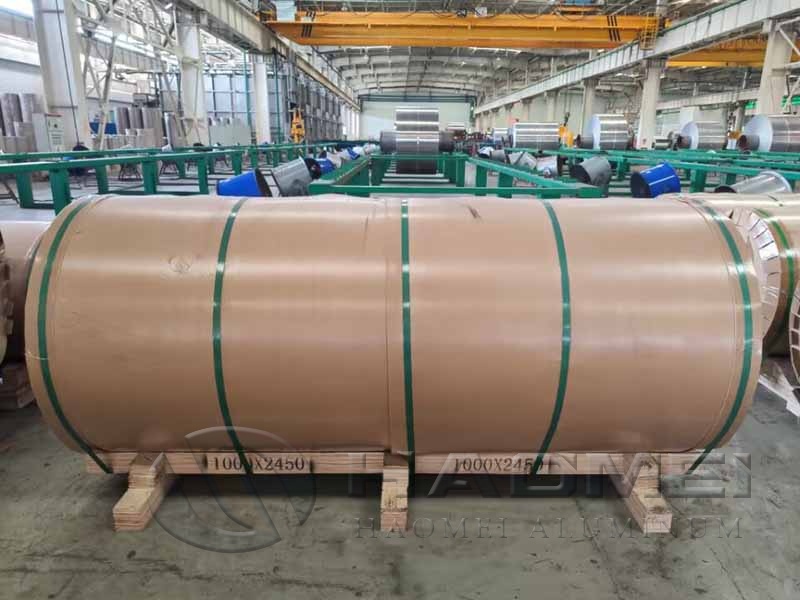
Verify aluminum 5754 H22 properties using composition limits, temper tests, corrosion comparisons, and order controls for reliable flat-product decisions.
Aluminum 5754 H22 is a non-heat-treatable Al-Mg alloy supplied in a strain-hardened, partially annealed condition. For industrial orders, the highest-risk issue is usually not alloy identity: it is confirming that the delivered temper actually meets the required strength, formability, thickness tolerance, and surface condition.
The H22 designation means the material was strain hardened and then partially annealed to a quarter-hard condition. It should not be interpreted as a fixed percentage of cold reduction. Mechanical values depend on product thickness, applicable standard, test direction, and the agreed delivery condition.

Material Data and Performance Limits
EN AW-5754 is commonly designated AlMg3 under European alloy nomenclature. It is valued for corrosion resistance in humid, marine, and industrial environments, along with moderate strength and good formability. Typical applications include tank bodies, vehicle panels, flooring, pressure-related fabrications, and formed industrial components.
The applicable chemistry standard is generally EN 573-3. The table gives the specified composition limits for 5754 alloy. Material certificates should report the actual melt analysis.
| Element | Specified content, % by mass |
|---|---|
| Magnesium, Mg | 2.6-3.6 |
| Manganese, Mn | 0.50 max. |
| Silicon, Si | 0.40 max. |
| Iron, Fe | 0.40 max. |
| Chromium, Cr | 0.30 max. |
| Zinc, Zn | 0.20 max. |
| Copper, Cu | 0.10 max. |
| Titanium, Ti | 0.15 max. |
| Other elements, each / total | 0.05 / 0.15 max. |
| Aluminum | Remainder |
For 5754 H22, commonly referenced minimum mechanical requirements under EN 485-2 are shown below for flat-rolled products. Confirm the revision of the standard and ordered dimensions before using these figures for design release.
| Nominal thickness | Tensile strength, Rm | 0.2% proof strength, Rp0.2 | Minimum elongation, A50 |
|---|---|---|---|
| 0.5 to 1.5 mm | 190-240 MPa | 80 MPa | 3% |
| Over 1.5 to 3.0 mm | 190-240 MPa | 80 MPa | 4% |
| Over 3.0 to 6.0 mm | 190-240 MPa | 80 MPa | 5% |
| Over 6.0 to 12.5 mm | 190-240 MPa | 80 MPa | 6% |
These values explain the practical role of H22: it provides more resistance to denting and handling damage than annealed O temper, while retaining better forming latitude than harder H32 or H34 tempers. Deep drawing, tight-radius bending, and aggressive stamping still require trial validation, especially where bend lines run transverse to the rolling direction.
5754 has good natural corrosion resistance because of its magnesium content. However, corrosion performance is not determined by alloy alone. Fabricators should control water traps, galvanic contact with dissimilar metals, chloride deposits, damaged coatings, and welding contamination. For prolonged elevated-temperature service, evaluate sensitization exposure and the relevant design code rather than relying only on room-temperature certificate values.
Temper Verification and Receiving Tests
A chemical analysis can confirm 5754 alloy, but it cannot prove H22 temper. Temper must be verified through mechanical testing and traceable production documentation. This is especially important when material will be bent, welded, polished, anodized, or used in visible vehicle panels.
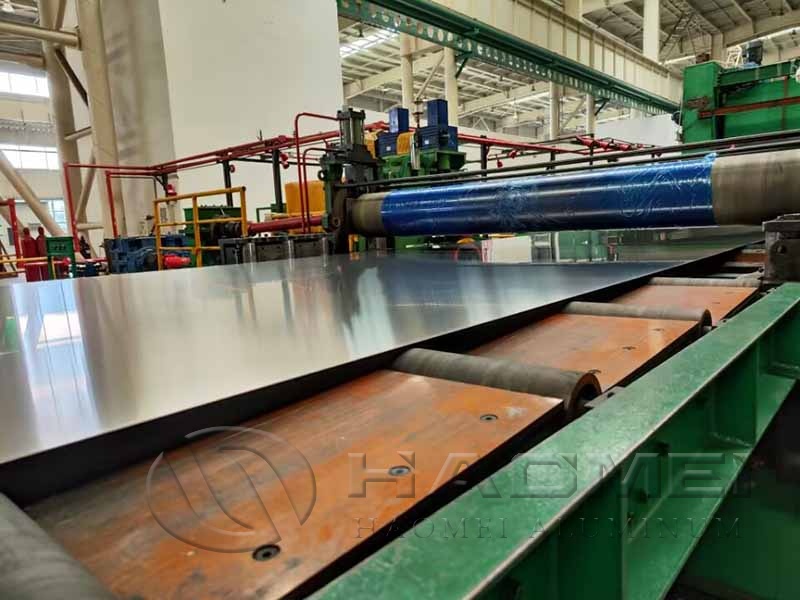
Use this receiving checklist for each heat and production batch:
Require a 3.1 inspection certificate in accordance with EN 10204, identifying alloy, temper, heat number, dimensions, mass, and test results.
State the governing specification on the purchase order, such as ASTM B209 for aluminum and aluminum-alloy plate and sheet, or EN 485-2 and EN 485-4 for mechanical properties and dimensional tolerances.
Match the certificate tensile strength, proof strength, and elongation to the specified thickness range. Do not accept a generic H22 declaration without measured values.
Define tensile-test direction. Longitudinal properties are common, but transverse performance matters for formed parts and should be agreed where relevant.
Verify thickness at edges and across width using a calibrated micrometer. Tolerance requirements should reference the selected standard or a stated tighter agreement.
Inspect coil edges, camber, oil level, dents, roll marks, scratches, and edge cracks before slitting or blanking.
Where critical forming is involved, perform a production-representative bend or stamping trial before releasing full conversion.
Tensile testing for aluminum products is commonly performed using ASTM B557 or ISO 6892-1 methods, depending on the agreed standard system. A result near the lower proof-strength limit may still conform, but it can change springback and forming consistency. When repeatability matters, specify a narrower mechanical-property range rather than only the minimum standard requirement.
Selection Against Similar 5xxx Alloys
The right comparison is based on fabrication and service exposure, not only strength. 5754 H22 is often selected where corrosion resistance and moderate forming capability are more important than maximum structural strength.
| Alloy and temper | Relative strength | Formability | Typical selection reason | Important limitation |
|---|---|---|---|---|
| 5754 H22 | Medium | Good | Corrosion-resistant panels, formed tanks, transport parts | Not the best choice for high-strength structural duty |
| 5052 H32 | Medium | Good | General fabricated parts and architectural components | Chemistry and certified property range differ from 5754 |
| 5083 H111 | High | Moderate | Marine structures and high-load tank applications | Higher cost and less suitable for demanding forming |
| 5454 H32 | Medium to high | Good | Elevated-temperature tanks and transport equipment | Must be specified separately; it is not interchangeable with 5754 |
For welded assemblies, 5754 generally retains practical corrosion resistance, but the heat-affected zone will soften because H22 strength is created by cold work rather than heat treatment. Design calculations should use welded-condition properties when welding is part of the finished component.
Commercial pricing should be compared on the same basis: alloy, temper, thickness, width, coil weight, tolerance, surface class, protective film, certificate level, packaging, and delivery term. A lower quoted metal price can be offset by wider thickness variation, unusable edge quality, or inadequate traceability.
Use the following order description to reduce disputes: EN AW-5754, H22, exact thickness and width, permitted thickness tolerance, product form, surface requirement, edge condition, quantity by net weight, applicable standard, EN 10204 certificate type, packaging method, and acceptance-test requirements.
- Aluminum 5754 H22 PropertiesAug 31, 2026
Verify aluminum 5754 H22 properties using composition limits, temper tests, corrosion comparisons, and order c...
Inquiry
TABLE OF Contents

Haomei Aluminum CO., LTD.
Tel/Whatsapp: +86-15978414719
Email: sale@alumhm.com
Website: https://www.alumhm.com
Xin'an Industrial Assemble Region,Luoyang,Henan Province,China
Office Add: 1103, No.14 Waihuan Road, CBD, Zhengzhou, China